Home inspections Salem Oregon

Wood Chip siding/OSB Problems and Maintenance Ideas Noted on Salem Oregon Home Inspections

As wood products have become more and more expensive the search for a viable inexpensive alternative has intensified.  In the world of siding real wood is still hard to beat.  Real wood sheds liquid water and allows water vapor to effectively come and go.  Solid wood is really a fantastic siding material but it is expensive so creative companies have been trying to develop a product that could be made from wood by-product (wood chips and fiber).

Wood chip siding has been around for many years but in the late 80’s and early 90’s a certain type of OSB (Oriented Strand Board) siding really became popular around Salem, Oregon and the Pacific Northwest.  The type that really had issues was the lap type made by Louisiana Pacific (LP).  This product had an adhesive that did not resist moisture effectively, and because proper sealing with primer and paint and continued home owner maintenance cannot be counted upon, the siding began to absorb moisture very quickly and began to deteriorate (grow mushrooms/fall apart).

LP went back to the drawing board, made some adjustments and continued to produce a very similar “wood chip” lap siding.  The adjustments were made to the sealing process.  They primed the entire board at the factory not just the front face, and they put a bevel on the drip edge of the siding that would help water drip off instead of being absorbed.

Wood chip siding also comes in panel form and although it is a similar product to the lap siding it doesn’t have as high of a percentage of vulnerable areas.  With the lap siding the bottom drip edge and all the other edges (only the front face is really the only durable side) are vulnerable and should be actively sealed/maintained with primer

and paint.  The panel boards come in 4’x8′ sheets and again only the edges are vulnerable but the damage resistant surfaces (again the front face) are much larger per piece.  The panels edges still need to be sealed actively.

One of the most common mistakes I see on home inspections around Salem, Oregon is the very bottom edge of the siding not getting painted.  Of course I carry a mirror that makes it easier for me to see that bottom edge that is only 8″ off the ground, but even with out fancy home inspector g ear you can get down on your knees and make sure this most vulnerable of areas gets sealed.  Both panel and lap siding have this issue and usually from waste down is where the lap goes bad and the very botto m is where the panel siding doesn’t get painted and begins to fail.

Now what is “failure/deterioration/dry rot?” In one of my earlier posts I wrote about “dry rot,” and why I do not use that term.  I prefer to use the term deterioration and basically that refers to a level of hardness or lack-of-hardness.  A good rule of thumb is: “If you poke it with your finger does it flex easily?” or (and if you are looking to buy a home that is not yours yet please leave this method to the professional home inspector) “Will a screwdriver/awl/knife point penetrate easily?”  If the answer is “yes” to either of those questions then the siding will not be able to sufficiently hold on to primer/paint and therefore it will not be able to shed water effectively and will continue to deteriorate and possibly begin to allow deterioration of related areas of the home (wall structure).

Some of the composite (wood chip/particle) sidings begin to swell when the paint is failing and allowing water to be absorbed.  Sometimes this swelling can be stifled with prudent and active painting.  But again the siding has got to be “hard” still. If it flexes it will not be able to hold on to the paint that will prevent further moisture absorption and will need to be replaced.

As the siding products have evolved, there have been good and not so good products.  The siding’s job is to shed water while allowing water vapor to come and go.  This job must be achieved while striving for low cost, durability, and ease of installation.  The “wood chip,” siding met a few of those needs, low cost and ease of installation, while suffering in the durability aspect.  However with knowledge of this type of siding’s vulnerabilities and active/aggressive maintenance it can be a lasting and effective siding system.


Jim Allhiser President/Inspector
http://SalemOregonHomeInspections.com
503.508.4321         jallhiser@perfectioninspectioninc.com

“Always on the cutting edge”
Page copy protected against web site content infringement by Copyscape

Pest and dry rot? Salem, Oregon home inspector defines “dry rot.”

Earlier I wrote two posts (Part 1 ad Part 2) on the terms: “pest and dry rot.” I detailed what the inspection was about and what the term “pest” might mean. Now I will try to describe the term “dry rot.”

IMG_3067

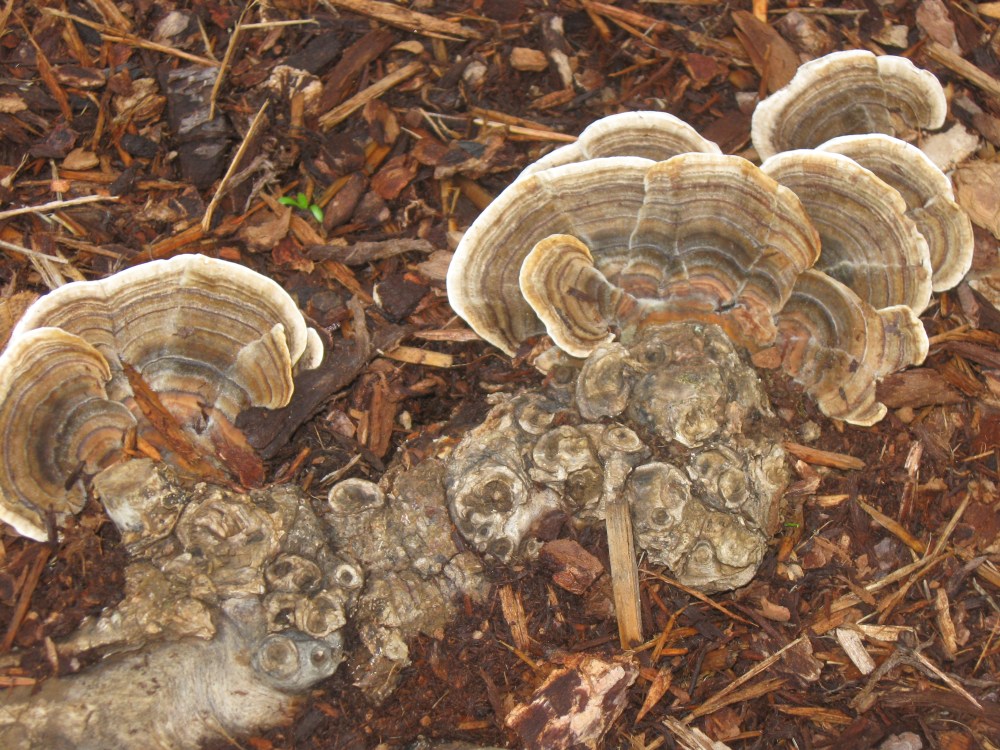
Wood destroying Fungus on a Salem Oregon Home Inspection

In the real estate world any rot or deterioration refers to dry rot. The term is a bit confusing because all fungal deterioration requires moisture. The term dry rot actually refers a very specialized fungus that actually consumes wood that is dry or does not have a available water source.  The fungus actually grows hyphie (root like structures) up to 8 feet long! These root structures reach out from the dry piece of wood into the ground and collect and shuttle water to the dry piece of wood.

This type of fungus is very unusual around Salem, Oregon and I have only seen it twice in 5 years of inspecting homes!
Most all of the deterioration that I see is caused by a white rot or a brown rot. Both are fungi and both require direct and chronic exposure to moisture to allow them to consume the cellulose or lignin in the wood.

I know, I know this is earth shattering news.  But you can see why I prefer to call damaged wood: “deterioration” rather than “Dry Rot.”

Builders are Just Human or You Still Need a Home Inspection on a new Salem Oregon Home

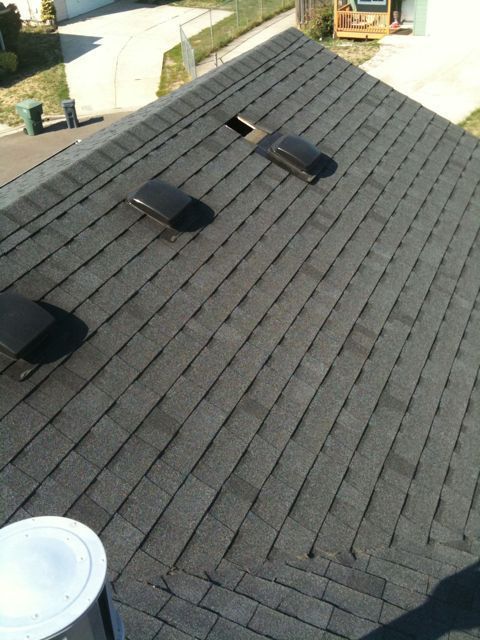
I was poking around one of the many good deals in real estate here in Salem, Oregon the other day and I noticed this “small” roof leak.

I love my job.  Above and beyond me finding problems with my client’s new homes, my job is to educate them on how their home works.  Most people who are willing to climb on a roof could notice that this roof vent is out-of-place but explaining the vital function of the roof vent is my job and I love it.

Home inspections are more than just a check list of the “problems” in a home.   They are a great start in the educational process that we as homeowners need to actively pursue.


New Child Resistant Outlets In Oregon

The fall of 2008 had some advancements in the electrical code here in Salem, Oregon. Although I am a home inspector and not a code compliance inspector I do pay attention to building practices so that I my educate my clients to the best of my ability.
One advancement in particular is the requirement for new homes to be equipped with a new type of child safe outlet. As of the late fall of 2008 all of the outlets in a new home have small baffles that prevent something other than a two-prong plug from being inserted. I demonstrate the safety feature in the video below:

The Door between the Garage and the Home: Your first line of Defense

The door between the garage and the home can be a very important part of fire safety in modern homes.  The issue that I routinely run into as a home inspector is this fact has only been an accepted building technique since the early 80s.  If a home was built before that, chances are that the door is not a “fire rated door.” The garage is a great place for a fire to start.  As far as house fires go,  the garage is where a vast majority of fires are started.  Paint cans, gasoline, natural gas appliances are all things that are usually in garages and are great for burning the house down.

If a fire does start in the garage a proper fire rated door and properly constructed fire wall are the best lines of defense to allow you to make your escape before the fire comes into the home.

There are a few ways to tell if your door has been updated.  Most solid-core and metal doors are fire rated.  There can also be a little metal tag on the hinge side of the door that will give some more information.

The pictures show what a hollow-core door looks like with thermal imaging/Infrared.  The strips you can see are actually sections of cardboard.

Jim Allhiser President/Inspector
http://SalemOregonHomeInspections.com
503.508.4321         jallhiser@perfectioninspectioninc.com
“Always on the cutting edge”

Page copy protected against web site content infringement by Copyscape

Pest and dry rot?? More confusing real estate terms (part 2 of 3)

What is “pest and dry rot?” Seriously I am a home inspector, shouldn’t I know to what these

terms are referring?

The words, “pest and dry rot,” are really confusing to this poor home inspector. What exactly is a pest? I know a family here in Salem, Oregon that has the south side of their home covered in box elder bug

s every year! They do not do any damage to the home (they eat tree sap) but they definitely qualify as pests.

To limit the confusion with these terms I try to not use them. I will always trade P&D with WDO

(wood destroying organism report).

Spiders, box elder

Not even close to a Wood Destroying Organism

bugs, nosy neighbors can all be terrible pests however they will not destroy your home.

Carpenter ants, wood boring beetles, termites, fungal deterioration will be part of my report and they are what home owners need to pay close attention too and control aggressively.

Pest and dry rot Wood Destroying Organism Part 1

P and D Wood Destroying Organisms Part 3

Not even close to a Wood Destroying Organism.

Appriaser thinks he is an inspector and burns down the home!

This week I had the misfortune of inspecting a home while a piece of appraiser did his “work.”
This excuse for a person spoke to the buyer’s agent about me right in front of me while never bothering to even look in my direction.  He told the poor agent that he would need access to the crawl space, that had a piece of wood screwed in place. (like she could do anything about the screws?)  She asked me if I would be so gracious as to remove the lid for her/him.  I told her that I would be glad to rent my screw driver to the highest bidder.

I save the crawl space till very last so this appraiser was all done with his work way before I was ready to go in the crawl space and again, although I was standing right there, he looked right past me and asked the poor agent, “…can we could get this panel off of the crawl space.”   She looked pleadingly at me and I looked at the dude and pretended like I didn’t know what was going on.  Finally he asked me if I could open the panel for him.  I told him that it is a real bummer when you don’t bring the right tools to work with you and that I knew where he could rent a screw driver…….

After the appraiser left the inspection continued and at one point the agent mentioned that he had said that although the attic had insulation there was very little and that the owner could add insulation.  That is typical on a 1920 house until I opened the attic access panel…..

The picture shows knob-and-tube wiring that is in contact and covered with cellulose insulation.  Knob-and-tube (KT) is the original type wiring that was run in this 1920s home and it can be prone to heating up while it is under load.  Covering this wiring with insulation can cause heat to build and is a very really fire safety concern.  So the moral of the story is: Appraisers please don’t comment on things you do not know about.  If I hadn’t been there to tell my client why insulating the attic was a bad idea who knows what would have happened.

I don’t mean to gripe, but I get a bad taste in my mouth when a total stranger feels it is necessary to be rude to me.  Get to know me first.  Then if you must be rude to me, at least you have a good reason!

Jim Allhiser President/Inspector
http://SalemOregonHomeInspections.com
503.508.4321         jallhiser@perfectioninspectioninc.com
“Always on the cutting edge”

Page copy protected against web site content infringement by Copyscape

Your Cat is Killing this Salem, Oregon Home Inspector and Your Home’s Crawlspace

Part of my job is crawling around under
people’s homes.  This is by far the
nastiest part of being a home inspector here in Salem, Oregon.
Most of the ti
me crawl spaces are really not all that bad.  Spiders, yes but in the Salem, Oregon area we
have very few seriously poisonous ones.
Spiders don’t chew on your
home and I am quite a bit bigger than most of
them so, they don’t bother me that much.


When
cats can get access, things get really nasty.
Your fluffy-wuffy

uses crawlspaces for a litter box, urinal, and
graveyard.  Yep, it can get nasty when
old Garfield can get under your home.

Not
only does Mr Snookums defecate in the areas I need to crawl, he also shreds and
disconnects ducts, and crawls between the heated floor and the insulation and
ruins the fiberglass insulation.


Sometimes
there are signs or other critters: rats, mice, raccoons, opossums.  They all like crawlspaces but it seems that,
per capita, the cats have market share on shear crawlspace destruct

ion.

Jim Allhiser President/Inspector
http://SalemOregonHomeInspections.com
503.508.4321         jallhiser@perfectioninspectioninc.com

“Always on the cutting edge”

Page copy protected against web site content infringement by Copyscape

Pest and Dry Rot? What is That?? Explanations of some confusing Salem, Oregon real estate terms.

Pest and Dry Rot.  Seems like some pretty straight forward items eh?  Actually this can be a little more confusing than you might think.

Pest and Dry Rot is an unbelievably ambiguous term that gets thrown around a lot during the course of a real estate transaction.  To limit the amount of confusion lets dissect the parts and expectations of a Pest and Dry Rot inspection:

Most of the time, around Salem, Oregon the “P and D,” is what loan companies want to see (if anything) as far as the inspections.  So right from the start, things can get weird.  Unlike an appraiser I, the home inspector, do not work for the loan company.  My contract is with my clients (usually the buyers) and I do an inspection for my client’s benefit.  I do not care about what a loan company finds important, they did not hire me.

What is a pest?  I have had neighbors that definitely qualify as pests.  I have even known some real estate agents and mortgage officers that might fall under that guise.  So how am I, your well meaning home inspector, supposed to comment on Pests?  Stay tuned and I will further delve into what this term actually means……:

Wood Destroying Organisms Part 2

Wood Destroying Organisms Part 3

Jim Allhiser President/Inspector
http://SalemOregonHomeInspections.com
503.508.4321         jallhiser@perfectioninspectioninc.com

“Always on the cutting edge”

Page copy protected against web site content infringement by Copyscape

Appraise this

I have noticed that recently appraisers are starting to
look at the condition of homes.  Although
I have no real issue with this practice I am curious about the training that
these appraisers have obtained that allows them to comment on rot, deterioration, electrical, plumbing
and various other issues.

While doing a
home inspection here in Keizer, Oregon the other day, the client and agent mentioned that the
appraiser had commented on the rot in the siding at the front and side of the
home.  This was good and I did not disagree but what about
the large section of garage door trim that you could stick your finger

through?  The appraiser apparently missed
that section.

I am not
concerned for my job as an independent home inspector/ consultant.  I am just curious about the direction of the appraisal industry.  I have no training and very
little knowledge about home values, so I try to not comment on, or even pay
attention to home prices.  I thought the inverse might be true for appraisers.  There is no
doubt that an untrained person could recognize significant deterioration in the
siding but what about the termite infestation at the very back of the stairs
that was not recognized because the person has no training on wood destroying
organisms?  Does that not become a condition of the loan?

I guess I am just venting/wondering out loud.  Where do you think this issue/appraisal industry is headed?

Jim Allhiser President/Inspector
http://SalemOregonHomeInspections.com
503.508.4321                   jallhiser@perfectioninspectioninc.com

“Always on the cutting edge”

Page copy protected against web site content infringement by Copyscape