Home Inspections

What to Expect when you’re Inspecting, Disclaimers

What to expect when you’re inspecting

You have gotten an offer accepted and scheduled with the best and brightest inspector in town.  Now it is time to check out his legal disclaimers.
Home inspectors as a rule do not accept liability.  It sounds funny, but in truth it is a defense against what we couldn’t see.  That means that home inspections are a visual snap shot.  We inspectors do our best to not miss anything but depending on the environment (read: boxes piled to the ceiling), the time of the year (hard to look at a roof under snow) or even a lazy or forgetful seller (they cover up stuff due to lack of proper knowledge) some things can be very hard if not impossible to see.
I frequently read about the poor couple that bought the turn-of-the-century home and had an inspection, only to find out later that the walls were full of rot and termites.  The media has a neat little way of tilting the story.  It is never mentioned that the finishes and accessible areas of the home showed no signs of damage in the walls under the windows.  It is never brought up that the window sills had been collecting water for close to a century before being repaired and they forget that the poor home owners learned about the damage only after they actually started destroying the home’s walls to do remodeling.
I frequently explain to my clients that I am an inspector that they are paying to spend 2 1/2 to 3 hours with them and I will do my darnedest to not miss anything significant but I will not buy them a new home if I do turn out to be a human being.  There is always the possibility for things to be going on under the surface but most of the time there will be indications of those things.
When I bought my first home, I was amazed at the home inspection.  The dude spent 45 minutes in my 1950’s fixer.  He did a very poor job and missed some major things.  In my previous post I suggested getting out their and shopping inspectors, something that I did not.  I let my agent schedule the inspection for me and I came away with a very bad taste in my mouth for the home inspection industry as a whole.  A little less than a year after that I heard about thermal imaging and home inspectors that were using it to help with a more in-depth education for their clients.  I knew that it would not be hard if my last inspector was the guy that was my competition!
That first home inspection experience ensures that I do my best inspecting every day for every client.  Even though my disclaimer says that, “…its not my fault and you agree..”  I try to make it a personal goal to not miss significant issues.
Of course every thing is negotiable.  I had clients recently ask me to adjust my disclaimer.  That is just fine but realize what you are getting for around $400.  If you expect a home inspector to suffer liability the price of the inspection must change.  If you increase liability you increase risk you increase price.  I am thinking around $5000 might justify my liability but on second thought I want to be a home inspector not a defendant, please go find yourself another inspector…


Salem Oregon Home Inspections

Multi-wired circuits

A material and man-hour (read MONEY) conservation technique I have noticed more and more recently is called multi-circuit wiring. The purpose of this technique is to save money on wires and man-hours by pulling only one wire for two circuits.

Seems like a good idea and there are definitely a fair amount of contractors that agree. During normal operation of most circuits no significant problems will be noted. However if too many watts are added, the circuits could be prone to overheating.

The issues come from the neutral wire. With a single circuit wire there is a black wire for the hot, and a white wire for the neutral. For simplicity sake let’s look at these as the supply=hot(black) and the return=neutral(white) for the current respectively.

A 15amp circuit should use a 14 gauge wire for supply and return. That means that if the maximum amount of power (allowed by the breaker) is called for, the wire on the supply and on the return are both thick enough to hold all of 15 amps or 1800watts at 120 volts. [(15amps)x(120volts)=1800watts]

Now let’s save some time and materials during installation by running a multi-circuit wire. This wire has two supplies and only one return. Remember each one of the 14 gauge wires are designed to hold 15 amps but now you have two wires that could be called on to hold all of 15 amps and only one 14 gauge return/neutral wire for 30amps! (15+15=30amps) Normal alternating current modulation will prevent the neutral from having to carry both loads at the same time but if something goes wrong and the neutral does experience over current in this manner the breaker will not trip, because breakers only protect the hot/supply wires.

The deal is the authorities that say this is ok are betting that there will never be a situation that causes both wires to call for the entire load at the same time. As a home inspector here in Salem, Oregon I am paid to be a “worst case scenario,” guy. It is my job to alert my clients to not only issues but also potential issues and educate them as best I can.

Mold our Constant Microscopic Companion

This is mold that you can see

This is mold that you can see

Mold is one of the scariest problems in today’s issues with Indoor Air Quality. The problem is you can’t see it.


Don’t get me wrong, if it looks and smells like a duck it usually is, however I have been surprised on inspections here in Salem, Oregon, by laboratory results often enough to know that speculation of microscopic content is not a good idea.

There are definitely conditions that you can detect with unaided human senses that will lead to mold growth. Earlier posts of mine labeled mold as a symptom of the problem. The problem (water) can be detected….usually.

If you have water, organic material and ventilation issues you have perfect conditions for mold growth. Do not let moisture loose on your home. But even with uncontrolled moisture I have seen very low spore counts in the air.

The moral of the story is: if you think you have mold growing, get it tested, and do it right by hiring a trained, professional mold sampling technician.

The Oregon Gardens and Home inspections

I had the chance to visit the beautiful Oregon Gardens this weekend with my family. This is one of those special places that really needs to be visited many times throughout the year to enjoy the different plant displays.


The Gardens are located in Silverton,Oregon and if you like to grow things this is the place to be. I stay very busy inspecting homes in and around Silverton, OR and if you need to check on the condition of your new home contact me.


All content is Copywritten and is the property of Perfection Inspection Inc. Any usage that is not expressly permitted by Perfection Inspection Inc. is considered infringment and is punishable by law.

Going green.


One very important aspect of shrinking our “carbon foot print,” is re-using things to reduce our consumption of new things.


Being a home inspector here in Salem, Oregon I have the unique opportunity to go into other people’s homes and poke around in their crawlspaces, on their roofs and under their sinks. All of this snooping around turns up some very creative solutions to everyday problems.


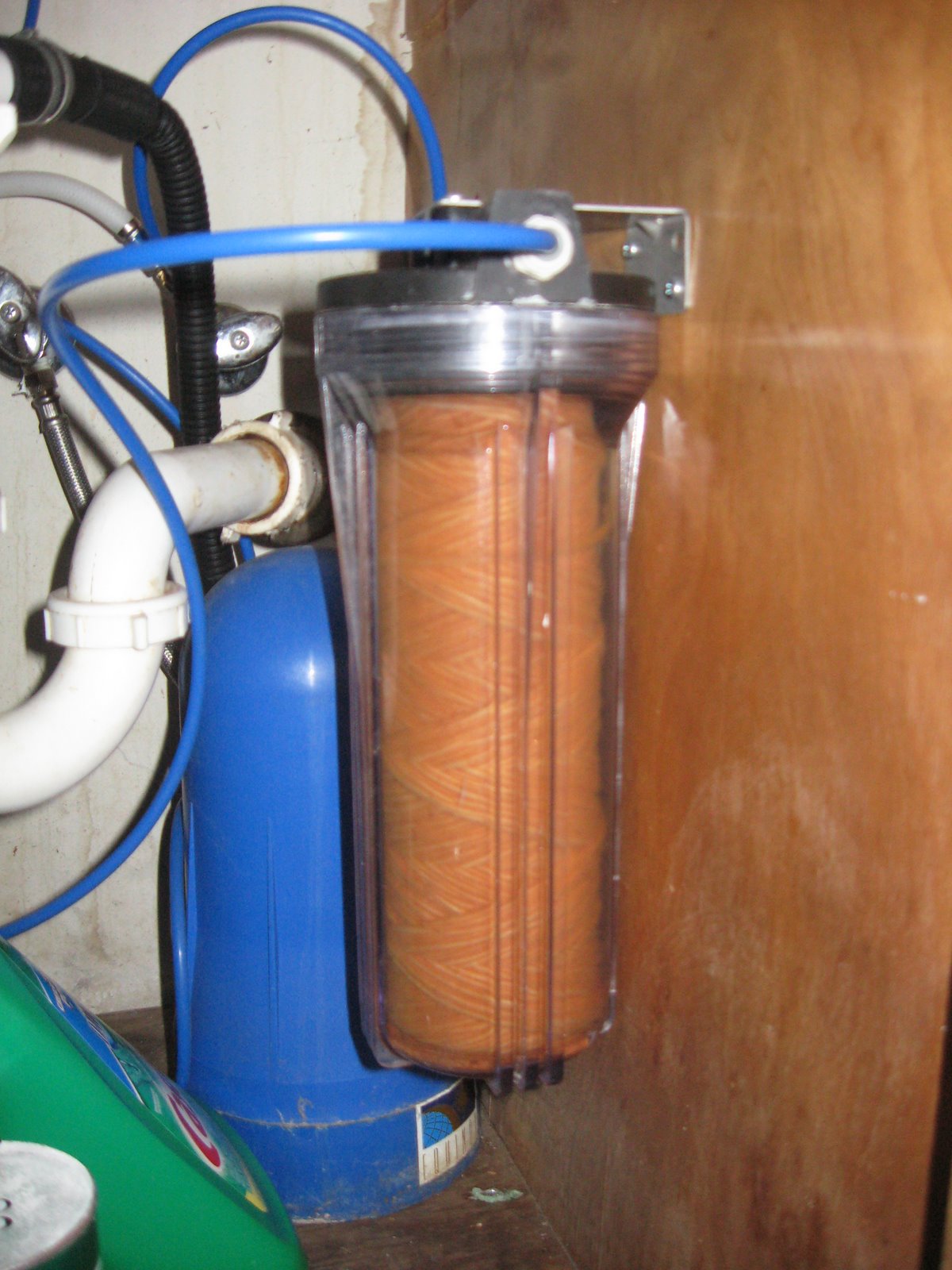
I am not sure if this is a new filter option or a very old one. This high-tech wool yarn filter may not be very effective at filtering out tiny particles but it appears to fit right in to the filter canister.


Problems Under the Surface


The wonderful world of residential construction can be very complex. A new home is a series of systems and components that rely on one another to perform properly. If the previous component is installed improperly all of the other systems that are built upon that component will not live up to their potential. I recently had the opportunity to inspect a beautiful new home here in West Salem, Oregon that was like a display home for just why you need a home inspection on a new home.

Cosmetically this home was very attractive. Vaulted ceilings, custom built-ins, crown molding and of course the ever present Brazilian cherry floors and granite counters. Under the fancy façade were a few very important details that the builder screwed up. One of those little things was a vapor retarder, big name for a very simple and relatively inexpensive component. It is basically a sheet of plastic stretched over the bare earth of the crawl space that prevents excess water vapor from leaving the soil (a normal and natural process) and being absorbed by the home’s wood structure (also a natural process but very harmful to the structure of the home).

With the vapor retarder missing, the moist soil provides all the moisture and humidity necessary for an extremely conducive environment for wood destroying organisms. Wood destroying organisms like molds, termites, and powder post beetles and other critters that can call your home food.

When I popped the lid to that crawlspace a wave of mustiness (mold spores) slapped me in the face. Upon closer inspection of the very wet, very muddy crawlspace it could be noted that although the air was full of spores from actively producing molds, no visible growing mold could be noted on the structure. However the scraps of wood, construction debris, that had been left scattered about were covered with very healthy fungal colonies.

All of that excess wood was another little screw-up. All of these little mistakes, although ultimately the builder’s responsibility, were also made by the contractors that were in charge of the vapor retarder, the contractors that left cellulose debris (plumbers, framers, and electricians), and the government official (building inspector) that is paid to ensure that these things don’t happen.

This poor home had other serious issues. Homes like these sometimes makes me wonder about some people’s integrity, however I guess it will always be job security for honest, independent building consultants.


Radon and the Crowd it Rolls with.

Radon can make you very sick and has been linked to more cases of lung cancer than tobacco. Radon is a radioactive gas that is produced when uranium degrades. Uranium has a tendency to geologically ‘hang,’ with granite. This is significant due to the fact that the geology of granite and other minerals can be mapped.

The EPA has a fantastic resource for general knowledge on all kinds of different environmental issues. They have a radon exposure map that is based on a geologic map of the United States. Basically it categorizes areas of the US depending on what type of rock is found in that area.

Unfortunately this map is only a good guess. It cannot tell your home or any other home has a radon issue. The only way to determine if your home has a radon issue is to (shameless plug) get it tested. If you live in Salem, Oregon I just happen to know of a fantastic home inspector that can help….


If it was a snake….it would have been too late.

Ah, the hazards of poking around someone elses home. We do get a fair amount of rain during the winter months in western Oregon. All of that precipitation can sometimes lead to a high water table. That is one reason there are so many crawlspaces in this area. If water does come up out of the ground it is hopefully safely covered with a nice plastic vapor retarder, instead of wreaking havoc with finished surfaces.
It can be very common for inspectors to see standing water when it comes time to crawl around with the spiders. I am not afraid of water, however when water is present with electricity that is a different story.


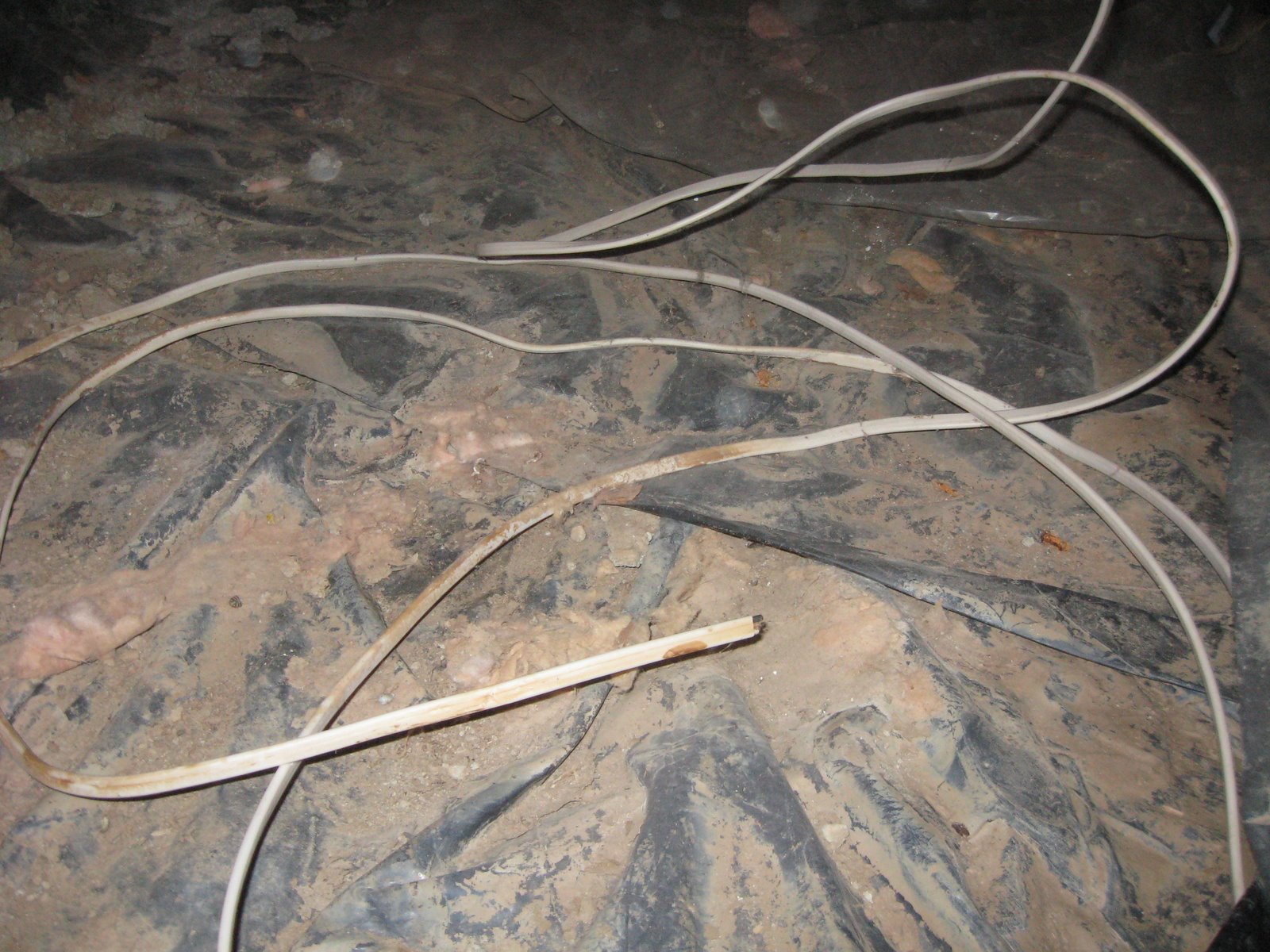
I came upon this deadly little coiled booby trap the other day.


This wonder piece of homeowner electrical handiness was currently energized, thank goodness the crawlspace was dry.


The Bomb in your Basement or Garage

Although in Salem Oregon water heaters do require a Minor Label for professional water heater installation, many handy home owners tackle this job on their own.

Here are just some of the things that well meaning installers can get totally wrong:

Lack of Straps: Water heaters in this area should be strapped on the top third and bottom third, to resist movement in a seismic condition. Water heaters are bombs, high temperature water under pressure can be an explosive combination. It is important to prevent the tank from moving.

Flue issues: This is absolutely important with gas appliances. If you don’t get the flue right you can allow carbon monoxide to freely enter your home. This particular flue was built out of vinyl dryer ducting. The plastic had been melting into a puddle on the top of the tank.

This is this home owners solution for the flue exhaust. The home owner may have thought that a clothes dryer and a gas fired water heater were basically the same thing.

Here is a picture of the draft hood in action. Notice the lighter’s flame tipped away from the hood. This means that flue gases, instead of going outside, are coming inside! This is potentially a deadly setup that has apparently been in place for years.

These are just some of the many things that can be done wrong by a less-than-handy handy person.