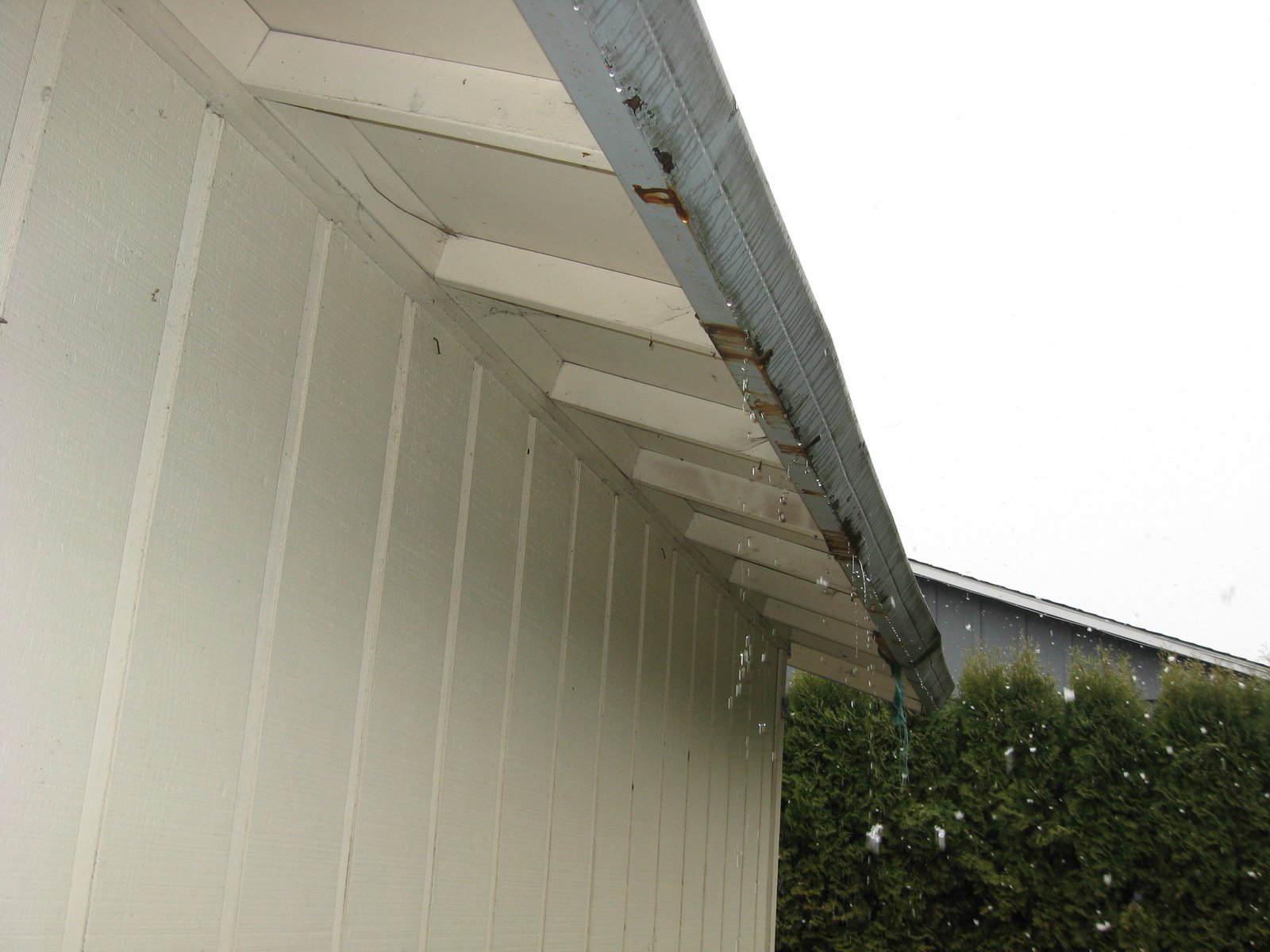
Hi, My Name Is Jim, I am a Home Inspector in Salem Oregon and I am an Addict

I think I may have an addiction. I hear admitting it is the first step to recovery.

I first realized I had an issue when I recently posted a blog about Home Inspections in Salem, Oregon and saw my standing in my town go from 10th to 9th. A few more blogs and a lot more time spent learning from others and commenting on their fantastic thoughts and ideas and I have moved up to 6th.

I am constantly thinking about SEO and how I can improve Perfection Inspection Inc’s web presence. I spend time at night brainstorming blog subjects that might be interesting for other people.

I am now starting to think about the copyrighting my blogs and other things I never thought would be concern me.

Yes I have a problem, but I feel that this network just might be the support group that will help me.

Mold is Everywhere

Mold is everywhere.

Mold/ has microscopic spores that are airborne and are able to easily blow around the world. Due to the spore’s ability to be in the air there is no place on earth that does not have fungal spores present. (except maybe special industrial clean rooms and operating rooms) With this knowledge of mold/fungus we can draw the conclusion that there is no such thing as a, “mold free,” house. All homes have spores present the spores are waiting for a conducive environment to grow. “Conducive environment,” means: temperature, food and water at the right levels.

Molds/fungi grow best between 50 and 80 degrees F.(the temperatures most of us find comfortable)

They can eat any organic material. (read: your home’s framing, sheathing, flooring, carpeting, paper faces on insulation and drywall, and most everything else in our homes)

Water is really the one thing we can and should control to stifle mold/fungus growth.

Leaks, plumbing or rain water, and poor ventilation are the two main offenders who often work together to help mold grow and reproduce.

Even though mold is everywhere we can control its growth. By vigilantly maintaining our homes, ensuring proper ventilation and repairing leaks promptly we can ensure that our homes do not become mold food.

Have you Inspected your Salem, Oregon home’s GFCI’s lately?

Ground Fault Circuit Interrupters: They are a wonderful safety item that has been required around water since the ’70s and according to the CPSC could prevent over two-thirds of the approximately 300 electrocutions still occurring each year in and around the home. Installation of the device could also prevent thousands of burn and electric shock injuries each year.

GFCI’s continually monitor what goes out, through the hot side and what comes back through the neutral side. Power always flows in a loop so these devices can tell when there is leakage, ie. ground fault.

Ground Fault: Is where the loop of electricity, instead of properly running out the hot side (into the thing that’s plugged in) and back in to the wall on the neutral side, gets shorted.  In other words the power jumps out of the loop / you might get shocked.

That jump/shock is very likely to happen when you are handling your mixer, weed trimmer, curling iron, etc…. that has an electrical problem (internal loose wire maybe) and you reach for something that can allow a direct flow of electrons to go right in to the ground (faucet, water pipe).

"Test Monthly"

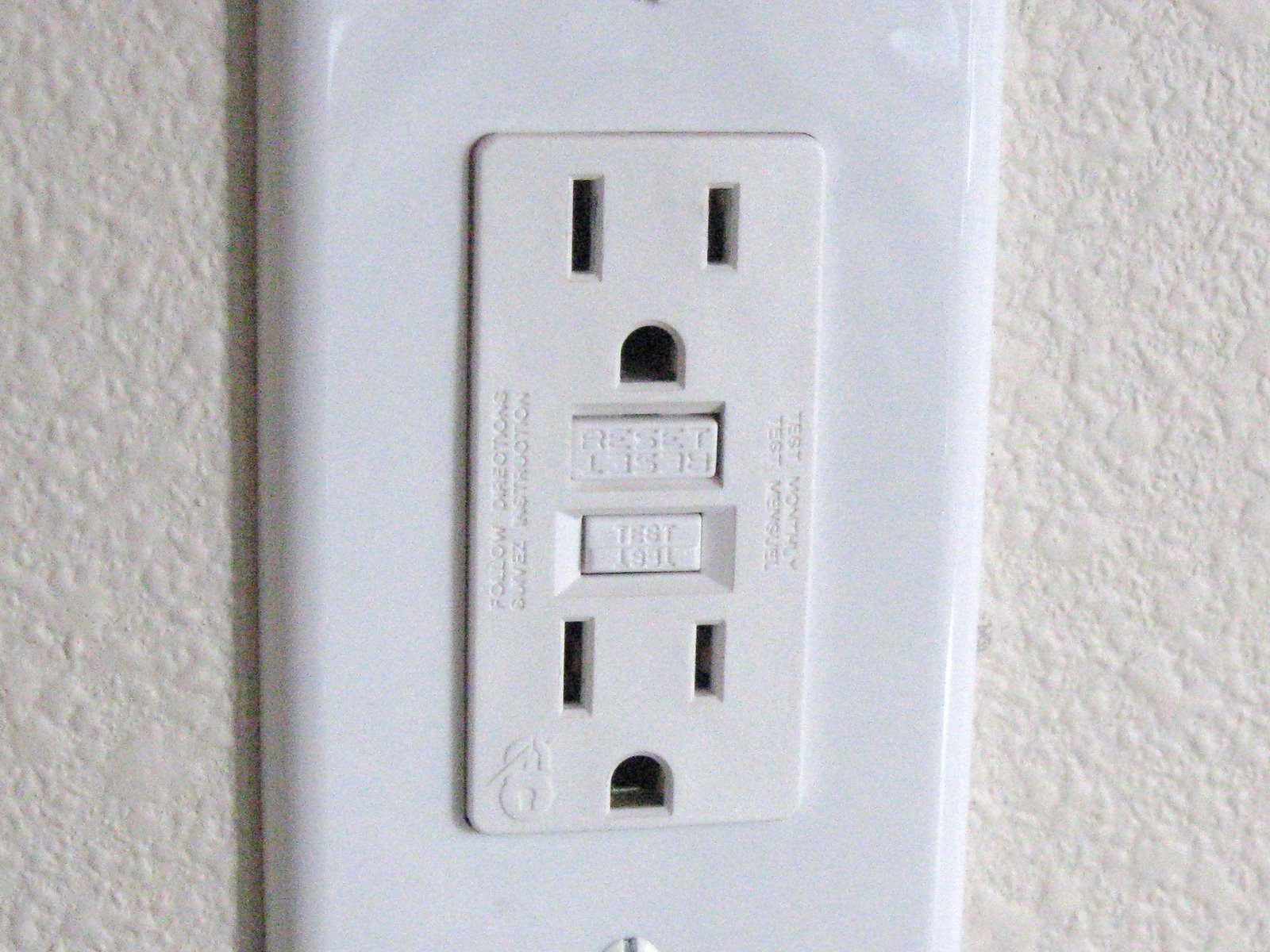
So how and how often should you test my GFCI’s? If you look closely on the GFCI it will say, “Test Monthly.” To properly test you should plug something in that you can see is on, like a lamp. Then press the test button. The buttons should ‘pop’ and the lamp should go off. Then reset the button and the lamp should come back on.

If the test doesn’t happen like that, it may be time to replace your hard working GFCIs.

If that is still to much work I would be happy to come and inspect the function of the GFCI’s in your home.

A swell in the window sill

I was inspecting a home the other day and when I met with the client, and asked her, as I always do, “Is there anything you may have noticed, that you have questions about.”

This is not only to address their specific fears and concerns but also so I am given a heads up on a potential defect. My client and their agent directed me over to a the window sills. Right along the edge that is closest to the window a small swell could be noted along the entire length. The sills were Medium Density Fiber (MDF) board and MDF is a wonderful historic indicator of past leakage. The swelling definitely appeared like moisture absorption however no other indicators were present. If the windows were allowing storm water to enter the home there should be staining at the top of the window and there was none. There should have been more evidence of leakage on the south windows, since that is where most all of our wind driven rain comes from and all of the windows on every side of the home seamed to show evidence of this swelling.

That night while I was writing the report and thinking about what might have been going on with the sills, I realized the only thing different about these windows is that there was not a bead of caulk between the widow and the window frame. The carpenter had done such a great job all of the reveals where beautiful and perfect. The painter thought maybe he didn’t have to caulk.

As the previous owner cleaned the sills with a damp cloth that small gap would suck up moisture. The MDF where it had been painted was relatively resistant to moisture damage so no issues on the painted surface however the gap that had been perfect enough to not caulk exposed the vulnerable MDF that was not even primed. (sponge)

The moral of the story is: Caulk. (as a verb and noun) Gaps, even perfect ones, will trap water and cause cosmetic issues that will be challenging to repair.

Crawlspaces: Need Love and Attention too

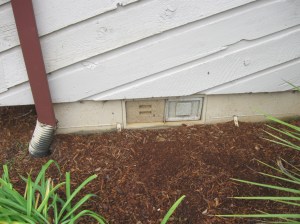
Plugged Crawlspace vent

plugged vent on a crawlspace in Salem, Oregon

Crawlspaces are a very popular way to build a home in the Salem, Oregon area. With a crawlspace the home is up off the ground, so most importantly to the builder, there is less concrete and that equals less money. Being up off the ground also allows the homes to stay away from the water that is frequently bubbling up from the ground when the rains come down. Over all this area is ideal for crawlspaces however there are some things that most homeowners don’t realize:

  • We live in a maritime climate. That means it does not freeze very hard (or at all) most winters. Those silly Styrofoam crawlspace vent plugs should be strictly reserved for the 3 days of below freezing weather we get every 2 years. At all other times the crawlspace vents should be left open! The times your crawlspace will need to be vented are in the winter when the water tables rise. If the vents are all plugged the standing water will create a very conducive environment for wood eating/destroying organisms. Molds, beetles, termites and carpenter ants all benefit from the moist stagnant environment those little plugs foster. Moisture content of 18% wood becomes a good food source for things that eat wood. If the moisture content of the wood can be kept below 18% (through effective ventilation) the wood will not be food.
  • You Must Monitor your Crawlspace. This does not mean that you actually must go in to your crawlspace (but you probably should). But you should at least open the hatch, peek and smell. The smell is the important. If you smell musty sticky rotting wood…. that means more investigation is needed! The sniff test is great to do year around but especially in winter. I have seen crawlspaces that passed the sniff test and had inches of standing water. If the vents are open, even if there is a little water under there, the moisture doesn’t effectively raise the moisture content of the wood structure.
  • Mechanical and Plumbing need attention too. Crawlspaces are also wonderfully suited to maintenance. Although crawlspaces are not the best places to hang out, if you need access to plumbing wiring, ductwork, it is all there. In order to monitor these components you will need to enter your crawlspace, or hire a professional inspector. Leaky shower/tub drains, disconnected ducts, and leaking supply lines are all very common repair items that I see often. If the leaks are left unchecked they will give the wood eating creatures all the moisture they need to call your house home.

At minimum, every 3 months you should pop that crawlspace door open and squeeze into to the tight, dark, dirty, creepy hole that is your crawlspace. You will save yourself money and get to know your home on a level you never thought possible!


Air conditioning your Home when it’s cool outside (how to ruin your AC unit)


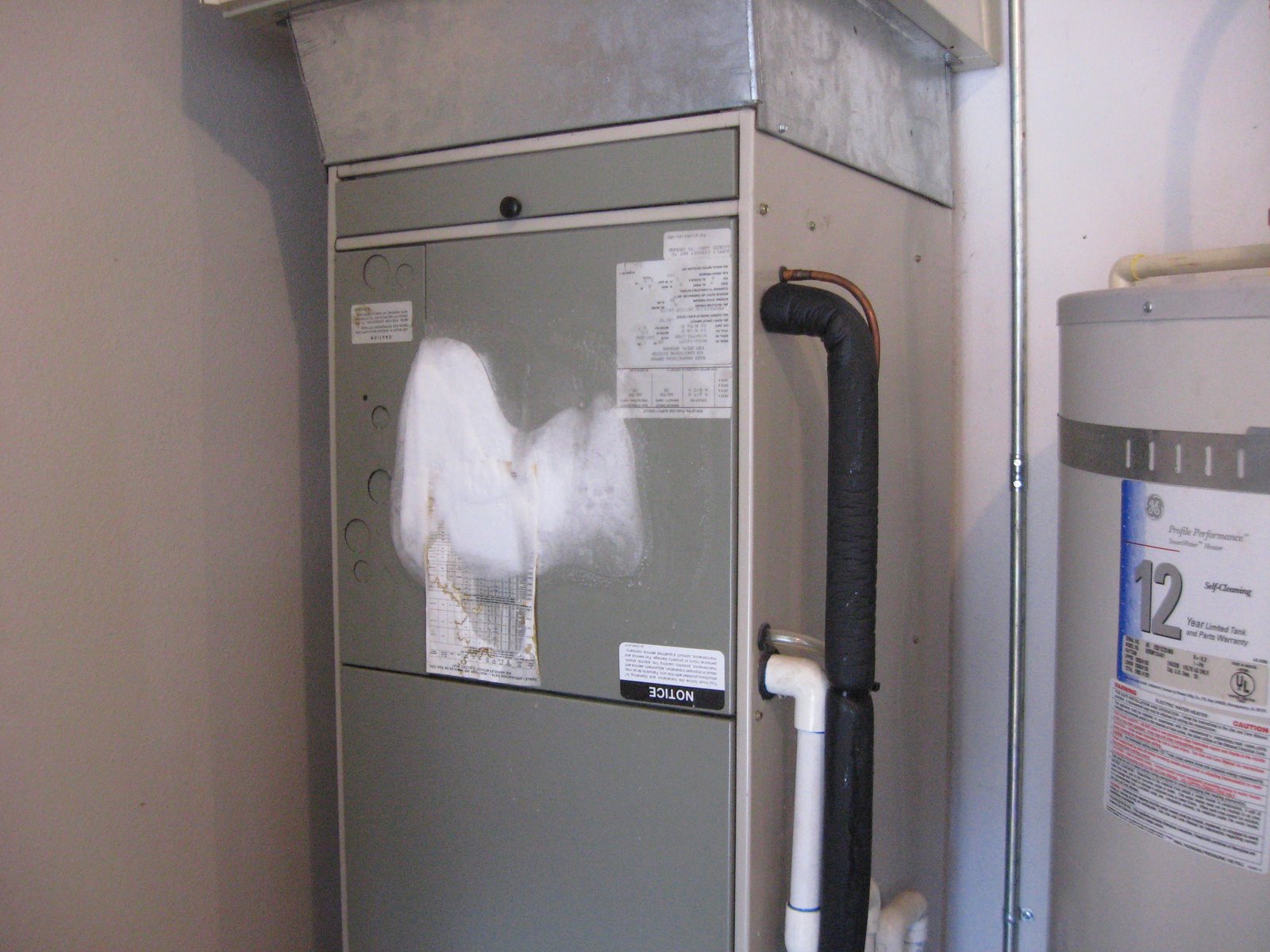
I came across an outdoor AC compressor the other day that was running at full speed. This was not immediately unusual, because it is August. Then I realized that at this early hour of the morning the outdoor temperature was only 50 degrees Fahrenheit! Upon closer inspection I noticed one whole side of the compressor was covered with about a 2 inch layer of ice!!

After I ran into the home and quickly turned the air conditioning off, I took a side bar with my clients and explained how an Air conditioner works: Through the powerful processes of evaporation and condensation the AC unit is able to absorb heat from the inside air and exhaust it outside. Right before the coolant enters the home it has been cooled and evaporated so it is a low pressure gas. After the warm house air is passed over the cool coil the coolant that has absorbed that heat travels outside is compressed and is a high pressure/high temperature liquid. Now the outdoor air which is cool compared to the compressed high temp liquid (100 degrees F is much cooler than 180 degrees F) is passed over the coils and heat is exchanged. Then the liquid is evaporated and it is cool again and cycled back in to the home.

The fatal flaw that can be noted on a cool day, is the inside air is not warm enough to absorb an adequate amount of heat from the gas. This causes ice to form. The ice covers the small metal fins that the air is blown through to exchange heat. If the heat cannot be exchanged the low pressure/low temperature gas cannot continue to drop in temp. Eventually the compressor, which should only compress gas, will try to compress liquid. When the unit tries to compress liquid the AC unit is toast.

The outside temperature being above 65 F is critical to testing AC units. For around 6 months of the year home inspectors in Salem, Oregon cannot test the AC system because the outdoor temperatures are too low. On most units there will be a fuse or switch near the outdoor unit. After September it may be a good idea to turn the unit off to prevent accidental cycles.

August Home Care Guide for the Salem, Oregon area

Home Care:

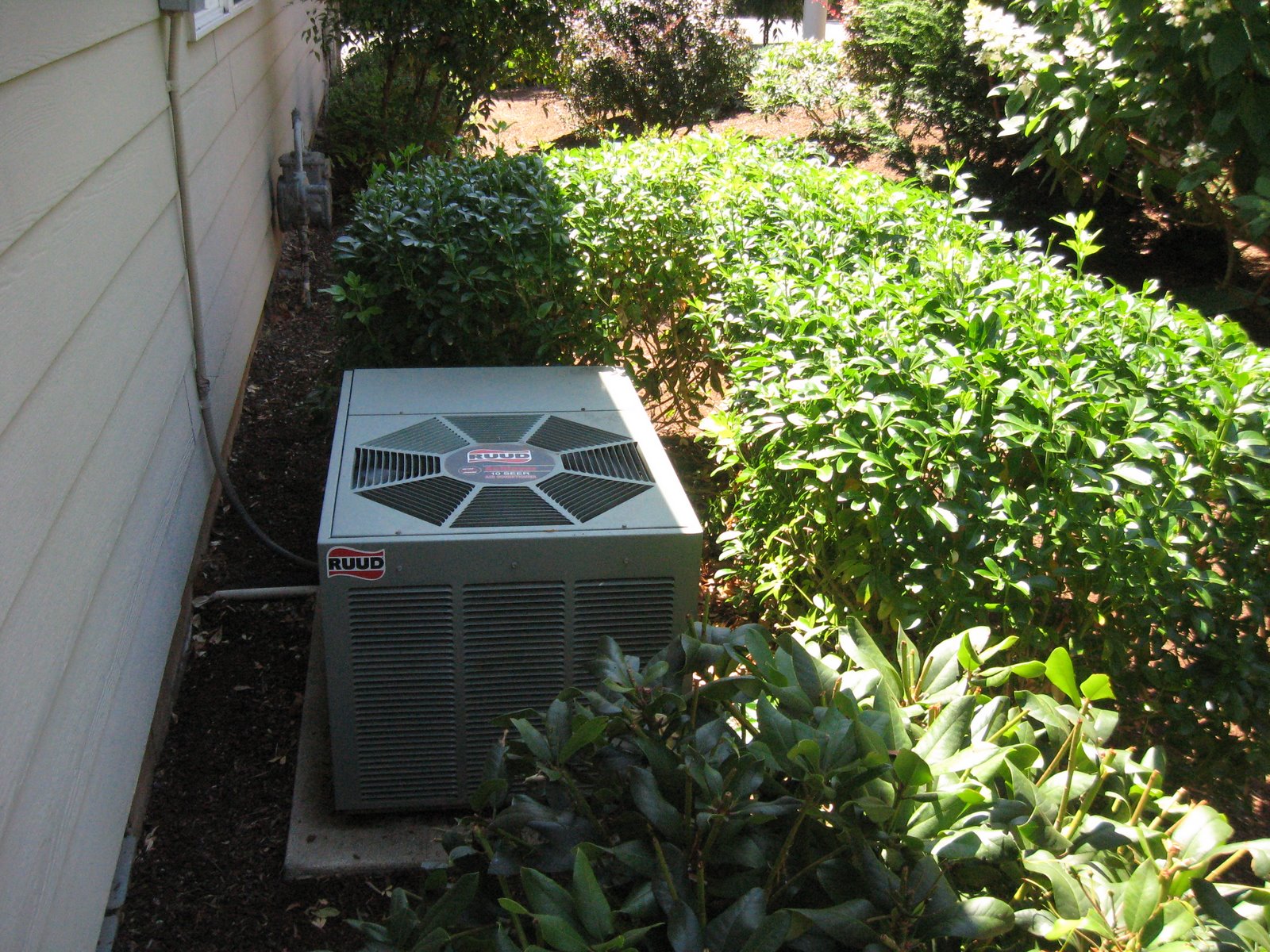
  • Cooling system (if installed) is working overtime in this month. Make sure the outdoor unit has at least 2 feet on three sides of free air. Keep the fins on the compressor clean as well. Depending on the model of compressor this may be a professional HVAC tech’s job. Keeping your compressor clean will be well worth it in terms of efficiency and life expectancy.

    Bushes are strangling the Compressor

  • Caulking and Paint: This is a wonderful month for these absolutely necessary items on every homeowner’s addenda here in Salem Oregon. A good rule of thumb is, “if the crack is too big to be filled with paint, caulk it.” Sealing the openings in the siding and trim around windows will not only make your home look better it will also prevent moisture from entering the wall system and you will also slow down energy loss from air infiltration. On real wood (trim and maybe siding) in the Willamette Valley think about painting every 4 to 6 years. If you wait longer than 4 to 6 years you risk damage and the preparation for the new paint will take much longer than it would have.
  • Clean gutters: Depending on the age and size of the trees around your home this may be a monthly to quarterly adventure. Even if they just have a little crud in the bottom, get it out. That crud can build up fast at the first nice storm and plug all of the tight bends downstream and underground.

Yard care:

  • Trim bushes: Maintain a space of about 18 inches around your home. Trim the bushes that have grown to have contact with your home. Plant contact with your home can create a very conducive environment for rot and carpenter ants love to travel from a plant in to a home. This should be the last time this year you trim on woody perennials. The trimming will stimulate growth and if you trim too late in the season the new growth will not have time to harden off and it will die.

  • Lawn care: Continue to mow weekly. At the end of this month switch from your summer (primarily Nitrogen) fertilizer to a winterizer (higher in Potassium) to help our cool season grasses establish a deep root system.


When questions on your home arise feel free to call or email me, your friendly home inspector, for trouble shooting and further helpful advice.

Jim Allhiser

President

Perfection Inspection Inc.

jallhiser@perfectioninspectioninc.com

503.508.4321

Roofing and Creative home owners

Roofing is one of the few skilled professions where being a licensed contractor is not required if you do it on your own home here in Salem Oregon. Hiring a licensed contractor is definitely encouraged, however a home owner with a little DIY initiative can tackle the job on their own with no distractions (like code enforcement inspections) from the city building department.

A roof shingle system is one of the few things on a home that will wear out. Unlike siding that can be painted and painted and preserved for eons, there is nothing to do about your roof shingles wearing out. There are things to do to extend the roof’s life. Adding ventilation, keeping debris off, treating moss and having a very steep roof will all prolong the life of the roof however even the best ventilated, cleanest, and steepest roof will generally only increase the life of the shingles by 20 years max.

Enter the creative home owner:

One way or another most homeowners will face a roof replacement at some time. Just like most trades you do not have to be a Harvard graduate to install a roofing system. The steps are, overall, very straight forward and logical. The problems most unskilled craftsmen face will be at tricky transitional zones: flashings, valleys, roof-to-wall and the dreaded skylight. It must be a testosterone thing but from what I have seen as a home inspector if problems are encountered they are handled one of two ways: Gallons of roofing tar, or scab-it-in and forget-about-it.

I guess maybe I have seen some roofs that have been replaced by home owners who knew enough to know that they needed some advice. That is what the internet is for as far as I am concerned. Those roofs maybe just flew under my radar mostly because they were done properly. So thank you very much to those homeowners who stopped and asked.

Gutters/Downspouts: the most important system on your home in Salem, Oregon

I am a home inspector in Salem Oregon. Home inspections are generally based on a perfect home. The one issue with that is that there is no such thing as a perfect home.

The job of a competent home inspector is to see and comment on everything. It would be impossible to determine what our clients did or didn’t care about in the thousands of components and systems that we look at. So we comment on everything and let our clients determine what they find important and significant.

Of course there are exceptions such as, in the Salem area of the Willamette valley Oregon, gutters and downspouts. If there is one system that needs to work perfectly it is the gutters and downspouts.

It has everything to do with how we receive rain. In our area the rain comes down relatively slowly. Very seldom do we get sudden volume, like an inch in a few hours, like other parts of the country. Our rain just seems to be slow and constant for about 5 to 6 months.

This means that grading is not terribly important. The soaking rains will soak in to the soil before they have a chance to run towards your home.

Gutters and downspouts however have an absolutely critical role in moisture management. If they are not fully functional they allow excess water to spill on around or under your home for 5 to 6 months. If the gutters are plugged or the seams leak they will spill water on to the soffit, fascia or splash water against the siding for 5 to 6 months! All of this wood and water is an ideal condition for things that eat wood. Fungus, wood boring beetles, and termites will all enjoy the easy refined cellulose meal that is your home.

Plugged downspout?

Even if the gutters appear to be fully functional above ground there is the, out-of-sight-out-of-mind, below grade downspouts. The downspouts going below ground has been very popular for the last 20 years. This is a major source of water intrusion for the crawlspaces in our area. When newly installed the downspouts should hug the foundation around the perimeter of the home and flow toward the storm drain. This is one of the first items to be installed on a new home and possibly vulnerable to damage until it is covered during final grading. If the concrete walkway poured over the pipe damages or disconnects the pipe, it can dump all of the water collected on the roof on to the soil near the crawlspace. This condition can lead to water in the crawlspace but also foundation movement.

Homes are not perfect. Lack of maintenance, wear and age can all have effect on homes. If you own a home in the Salem area of the Willamette valley keep your eyes on your gutters and next time it is raining, investigate your downspouts. They are one of the most important components of your home.