Author: salemoregonhomeinspector

Unknown's avatar

About salemoregonhomeinspector

I have been in construction for years and in 2004 I heard about thermal imaging and how it was revolutionizing home inspections. I now enjoy my job very much and I love to help home buyers and sellers protect themselves and learn all about the home that they are buying or selling. I live and work around Salem, Oregon and I am doing my best to be an authority on home inspections, Mold, Pest and dry rot, and Thermal inspections.

Secret leak detector!

A large part of homeowner maintenance is paying attention to little things

Check here for leaks

Areas that are above or below the line of sight, tend to be the most neglected areas. Deterioration, rot and leaks can hide in these areas that are just out of sight.  These areas are the places that keep home inspectors in business.

Plumbing supply and waste lines are always in areas that are out of sight. Special attention needs to be paid to these pipes periodically. Small leaks under the sink, or worse, in the crawlspace, can lead to big issues.
For those of us that do not really want to go into the crawlspace…  there is a secret little leak detector on most water meters.

The little dial on most water meters have a little red or white triangle. The triangle will spin with very little water movement. This can be a pretty handy way to check for leaks without actually going into the crawlspace!

On a recent home inspection in Salem, Oregon I noted the red triangle spinning.  No water was being used in the home…  The buyer and/or seller now have some more investigation to do.

As an attentive homeowner you should check this “little thing” to ensure that your supply pipes are not leaking.

Things that go Pee in your Crawlspace.

Believe it or not this post is not about incontinent home inspectors.  That will have to be another post. This post is about fuzzy critters and how they get under your home.

These tight, nasty, potentially wet areas are easy to neglect.  Low, out of sight and most likely disgusting it is usually best to not even think about these places.

This mentality also leads to the fact that I will often find defects in these areas.  One of the most popular defects I note is openings that allow pest access.
Most crawlspaces have these neat little vents for air flow.  Compared to the concrete foundation the metal screens on these vents are much easier to bash and slash to allow access for pipes and wires.   Most contractors care more about their next few hours than about the damage that occurs to the home due to pest infiltration over the years from a hasty hole cut into the crawlspace screen.

As an active, preventatively thinking home owner one of the best things to do (short of actually go into your crawlspace because really who wants to do that?) is to open the lid to your crawlspace and smell.   Yeah, seriously take a wiff.  If you are slapped in the face with years of rodent urine……you may have some more investigation to do.

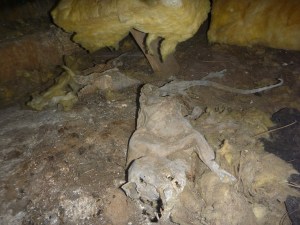
Today as I was doing a home inspection and crawling around looking for damage to my client’s potential home, I put my arm down and something, ……rather large…..*gulp*….pushed back.  I figured it was a healthy rat under the plastic vapor barrier.  This close encounter along with the smell of a public urinal led me to look for the rodent’s access opening.

Finding the hole was easy.  Right where the downdraft vented out, the metal screen was completely open.  This gave most neighborhood rodents plenty of room to move in.

The point of my wonderful, rambling tale is that you can and should check your vents.  These are on the perimeter of the home, which means you do not need to enter my place of business (your crawlspace) to see these open critter funnels.  Just take a stroll around the outside of your home and look and bend down to get a good look at those vents.  Especially the vents near the AC unit, cable, and or satellite connections.

Your home fails the Home Inspection

By:  Jim Allhiser  President

The term “home inspector” brings to mind report cards where a home “passes” or “fails.”
To some other inspectors this may be their reality. Through confusion and posturing other inspectors get to pretend like they get to make decisions. This is a small and disappointing group of my profession, as most good home inspectors want to make it very clear that home inspectors don’t pass or fail anything!

As a good inspector all I am there to do is to consult.  I should take a good look at the home and compare it to a perfect home (which is fantasy, by the way). There is no way that I could predict what my client will find important so I tell them about everything!   Besides that, I am not loaning my client money and I am not going to be living with them.   I really don’t care if the gutters get cleaned or if the window trim gets caulked properly. I am simply an observer and suggester.

This utter lack of authority can be very confusing to some people involved in the transaction.   I frequently hear agents, who should know better,  talk about how homes “passed.”  Or clients ask me if I “require” this or that. I just have to smile and tell my poor buyers that the only people that can pass or fail things are the people that are buying the home.  This can be frustrating for some that wish to hide behind an inspector, but I am about empowering people.  With proper education, my empowered buyer can ask the seller to have the deterioration in the flooring repaired and feel that this is reasonable.

Buyers often ask me, “..Would you buy this home?”  This is an impossible question for me to answer and that is not a cop-out!  The fact is that I have not been looking for a home.  I have not been mentally preparing for the change in lifestyle, finances, and the move.  I do not know what the school is like.  I have no idea what the other similar homes are like.  My buyers are frequently much more savvy about the competing homes than I am.  They have been doing serious real estate research!  I have not.  Homes can be a very emotional decision.  How could I guess the emotional state my clients are in after spending 3 hours poking around a house?

Trust a good inspector to do a great job at observing most all of the things that buyers will find important relating to the CONDITION OF THE HOME. Ask as many questions as you would like but don’t be surprised if we never tell you if the home passes or fails!

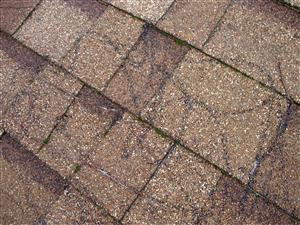
That is NOT how to clean moss of your roof!

First time home buyers are fantastic.  Never before have you had to do any kind of maintenance on the place that you were living.  If there was a problem you just called the landlord.

Now, you are going to be in charge of an ENTIRE house!!  It can be intimidating, especially after a good home inspection!  Not to fear you first timers, there have been lots of people in your shoes and many with even less technical understanding of the maintenance issues that plague your new home.

In the Salem, Oregon area one very common issue that will require attention is moss growth on your roof.  To be fair, this is not a life and death issue, however with less than a few hours of attention a year this issue can be effectively controlled.

Moss tends to grow in the shady sides of the home.  Mostly this has to do with the 8 months or so that your roof will stay wet in these areas.  This constant moisture creates an ideal location for algae population.  If moss is allowed to flourish unchecked it can create little pockets that catch and hold moisture.  Also the moss can actually begin to lift the shingles.  All of this catching and lifting will slow the water that is running down the slope and the longer water is on your roof the shorter the life of your roof will be.

Ok, we know that moss is not good but how do we control it?  Moss killer.

Moss does not like reactive metals like zinc and copper.  Commercial available moss killers like, “MossOut or any of the other sprays or powders are best.

  • The moss control measures that do not work or maybe work too well, at the expense of the life of your roof are: Strips of zinc that claim to leach onto the roof and kill moss continually.  These strips are good only in theory and only tend to protect about two feet of the down hill roof surface.
  • Also, moss will die if treated with laundry detergents, however laundry soaps have surfactants (read: de-greasers).  Composite shingles are made of asphalt (read: grease!).  These detergents can quickly chew holes in your roof!!
  • Power washers.  Please, please DO NOT power wash your composite shingle roof.  The idea behind killing moss is to prolong the life of your roof.  You will quickly shorten the life of the roof you are trying to prolong by blowing it to smithereens with a well meaning power washer.

That is NOT how your sliding glass door is supposed to lock!!

There are things that well trained and practiced home inspectors can find on homes over and over.  Many times these are issues that relate to components that are or have worn out.  Water heaters are a great example because

there is not a whole lot you can do to prevent them from wearing out (short of changing the anode rod).Other things relate to the difficulty of proper installation.  Sliding glass doors for instance, many people that can read a level and drive a nail with a hammer can install a sliding glass door.  However getting the door to latch properly takes a higher level of patience and/or skill.
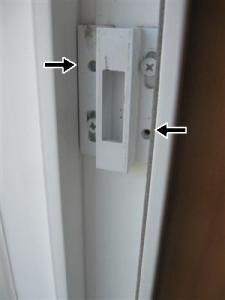
The wall plate must be in a precise position to allow the lock bolt to clear as the bolt is thrown.  If the wall plate
is too high, the bolt will come in contact with the wall plate and not open fully.  You have probably seen the sliding doors that you must open the lock partially while the door is open, then close the door, and finally close the latch.  While this does get the job accomplished it is not proper.
If the wall plate is too low the latch will not engage at all and the door can be opened with the lock fully engaged.  This is seen less often but is also not proper and a stick in the door should not be relied upon! 

The wall plate could also be in the wrong position side-to-side.  This is likely the cause of most of

the installation defects that I encounter.  If the position of the wall plate will not allow the bolt to clear properly and up and downadjustments do not improve the situation the plate may need to be shimmed to allow proper operation.
Once the wall plate is in the right spot to allow you to close the door, then throw the bolt and have the bolt engage it is time to install the 3” or better “security screws.” This is another item that I see missing over and over.  The long screws tie the whole door frame to the wood frame of the home.  This is much better than relying on the vinyl frame and provides a more stable lock. 

Hearing about contractors that state, “this is how the door is designed to lock,” is the worst and I must explain to my client’s that it is time to find a new contractor.

Bookmark and Share


Jim Allhiser President/Inspector
http://SalemOregonHomeInspections.com
503.508.4321         jallhiser@perfectioninspectioninc.com

“Always on the cutting edge”

Page copy protected against web site content infringement by Copyscape

What your Furnace shouldn’t look like!!

Home inspections are good for getting a basic look at all of the major systems and components of a home.  This means that the nature of an inspection is general.
One of the general tests that good home inspectors do is to fire up the furnace.  Before I was an inspector I thought, “Why should I pay for someone to turn on my furnace?  I can turn on a furnace and tell if it works!”  This is a fact, however, there are things that a good inspector will look for when the furnace fires up that I would not have known to look for before I was an inspector.
One of the main things that good home inspectors look at while the gas furnace fires up is the flames.
  • Proper operation of the furnace will have the flames turn on with a steady blue.
  • Once the heat exchanger is heated sufficiently the main fan (that will blow heat through the home) turns on
  • The flames should remain steady and blue with little to no change in shape and color when the main fan turns on
This video was taken on a recent Salem, Oregon home inspection that shows what a flame SHOULD NOT look like when the main fan initiates:

Bookmark and Share

logo
Jim Allhiser President/Inspector
http://SalemOregonHomeInspections.com
503.508.4321         jallhiser@perfectioninspectioninc.com

“No Surprises!”

Page copy protected against web site content infringement by Copyscape

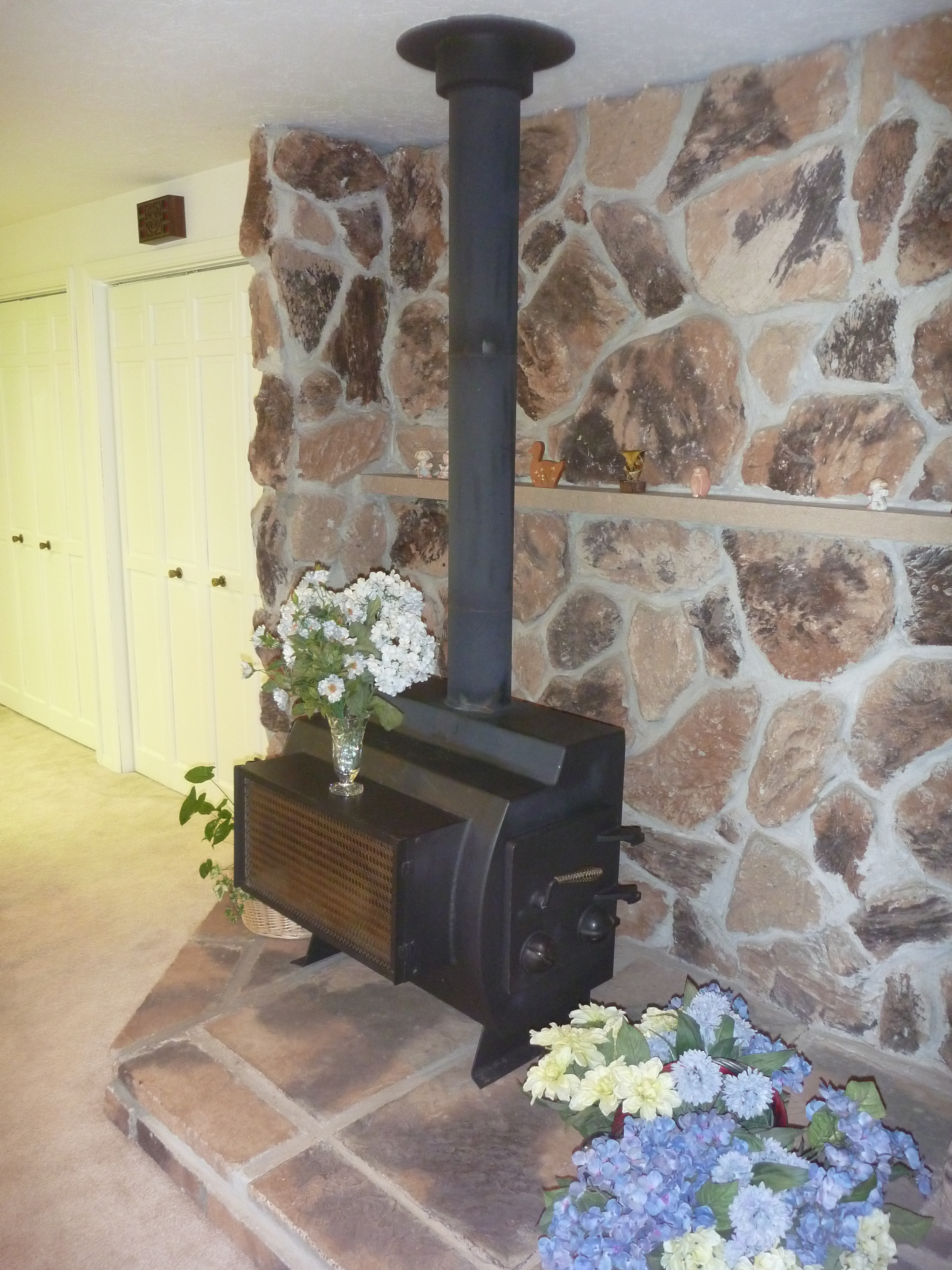
Get rid of your Old Wood Stove before you sell your Salem Oregon Home

Starting August first 2010, your trusty old wood stove will need to be destroyed!

Under the guise of environmental protection the Oregon State Department of Environmental Quality has decided that wood stoves built before 1985 must be removed if the home is part of a real estate transaction.  To be fair, wood stoves that are 25 years old or older are not as efficient as modern units and much of the heat that is produced is exhausted up the chimney.

Old wood stove headed for the scrap heap

Unfortunately, these regulations hit at a time when short sales and foreclosures abound and if a seller did have some wiggle room it may now be soaked up with the cost of the removal of the old wood stove.

If you do not know if the wood stove in your home or listing is ok or not there is some labels to look for:

If you are selling your home or have a home listed and a wood stove or insert is present you may want to check for these labels.  For more information check out the Oregon DEQs site: http://www.deq.state.or.us/aq/burning/woodstoves/questions.htm

Or you can always call your favorite Salem, Oregon home inspector who is always up on the latest government regulations:

Bookmark and Share


Jim Allhiser President/Inspector
http://SalemOregonHomeInspections.com
503.508.4321         jallhiser@perfectioninspectioninc.com

“Always on the cutting edge”

Page copy protected against web site content infringement by Copyscape

A River of Thermal images

This is a short video I took while on a home inspection of the water in the North Santiam river.

My handy little thermal camera can show all sorts of nifty temperature differences.  Including electrical hotspots, structure, insulation, leakage, critters and apparently the water temperature in the river.

Looks a bit cold for swimming but I am sure the salmon and steelhead that are headed upriver find those temperatures just right!


Jim Allhiser President/Inspector
http://SalemOregonHomeInspections.com
503.508.4321         jallhiser@perfectioninspectioninc.com

“Always on the cutting edge”

Page copy protected against web site content infringement by Copyscape

Bookmark and Share

Crawl Space critters……

Written by:  Jim Allhiser President/Inspector

Although millipedes do not chew on your home they do eat organic material.  If the organic material (wood) is not actively holding up your home it should be removed.


Jim Allhiser President/Inspector
http://SalemOregonHomeInspections.com
503.508.4321         jallhiser@perfectioninspectioninc.com

“Always on the cutting edge”

Page copy protected against web site content infringement by Copyscape

Bookmark and Share

Can you tell me how to get, how to get to find a roof leak

Can you tell me how to  find, how to find a roof leak ……..

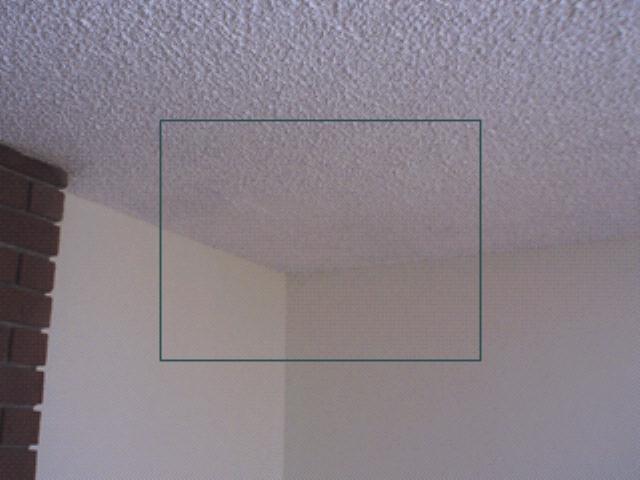
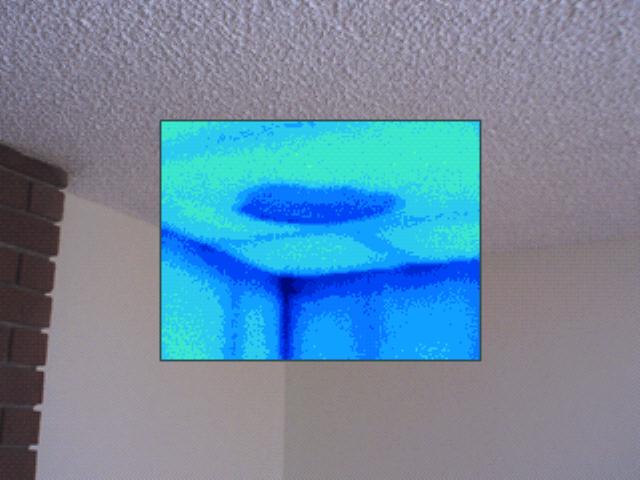
While most people complain about our recent downpours they have been providing me with much-needed rain to make leaks light up.  One of the biggest benefits having a thermal image camera is the ability to see things you can’t see with your visual senses.  A recent inspection on a home on Sesame Street and no I don’t need you to tell me how to get there, I found a leak that wasn’t showing through the finished surfaces yet….

Although advanced in age the surface of the roof did appear to be satisfactory.  On initial scans from the kitchen and family room there did appear to be an interesting cool spot in the family room and upon further investigation this cool spot did in fact turn out to be a current wet spot. This was roof leak.

Although no Big bird or other Muppets could be noted during my investigation, I did provide some much-needed information for my clients.   Thermal Imaging again proved its value and ensured my client’s home would be a safe and dry place to live