Electric Eyes Save Indiana Jones!

Written By:  Jim Allhiser

Copy written by Perfection Inspection Inc.

Who doesn’t remember the scene where Indiana Jones dives under the stone wall that is closing barely squeezing to safety!? Cinematic excitement at it’s finest and something that most children would love to recreate. Garage doors that are closing appear very similar to that scene and unfortunately not every child has cleared the door before it closed shut.

Garage doors are the largest and heaviest moving parts on our homes and can be very dangerous if ALL of the modern safety features are not installed properly. Several years ago the auto-reverse feature became standard. This feature reverses the closing door when the door meets a certain level of resistance. This safety feature is good however the pressure is still enough to hurt or even kill kids or pets.

The most recent advancement is the infrared beam safety feature. Straight out of a high security spy movies the little sensors reverse the door when the beam that shoots across the bottom of the door opening is broken.  These infrared beams are great but even intelligent high tech safety features are of little use if they are not installed where they are intended.
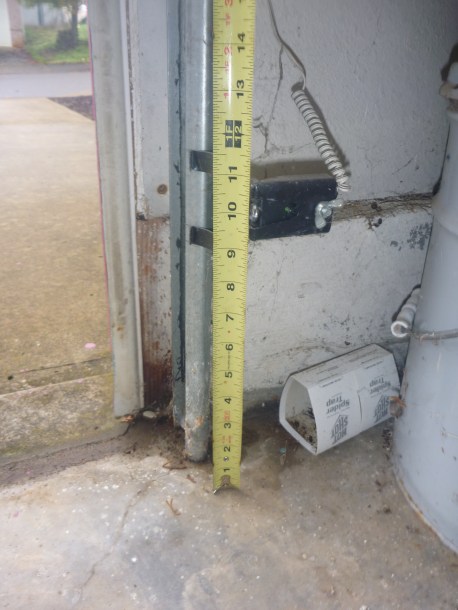
Most manufactures state that the beam should be no higher than 6″ off the ground.  The homes around Salem, Oregon that I inspect usually have foundation walls that extend up to around 9″ above the floor of the garage.  Consequently I usually see the little beams installed around 10″ above the floor, after all it is much easier to attach to wood sill plate than have to drill and anchor into concrete!

Of course if that is still too much trouble there is always an option to just slap them together and secure them above the opener.

But that installation is really for those who are too smart to let kids or pets get in the way of the closing door…..

Powered by ScribeFire.

Please read when installing

Funny thing about labels, they can tell you some useful things but there is a trick…..you need to actually read them.

There are labels for almost anything, to tell you when you should purchase something, or throw it away or even how it should be installed…..

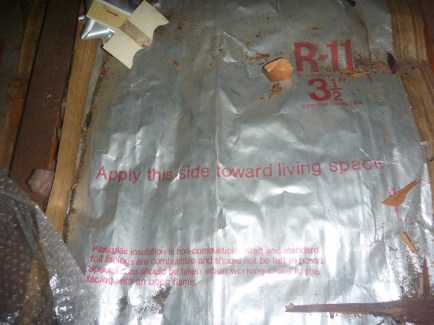
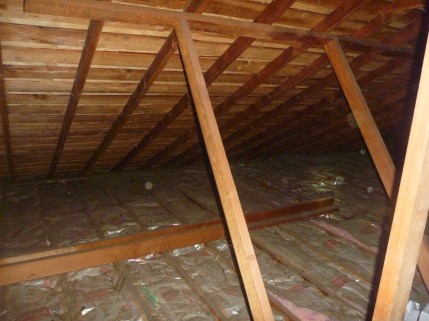
I was in a Salem, Oregon attic the other day and I noticed some labels.  These labels were on building components and the labels had instructions or indications for how the product should be installed.  The first label I noticed was on the fiberglass batt insulation:

Clearly, right on the surface of the paper face were some instructions, “Apply this side toward living space.”   I was in the attic space and it was definitely not set up for “living.”  The reason for this label has to do with the movement of moisture vapor as it leaves the living space and enters an unheated space.  With the vapor barrier/paper face installed improperly, water vapor that is traveling up through the ceiling and through the insulation hits the big temperature difference at the paper face and condenses into liquid.  Here the liquid water is trapped and will cause bad things to happen to the home (mold, rot, deterioration, ect).  When the paper face is installed properly the vapor will not hit the dew point till it is past the vapor barrier/paper face and if the vapor condenses into liquid in the fiberglass batting, it can breath and escape and most importantly, is not trapped!

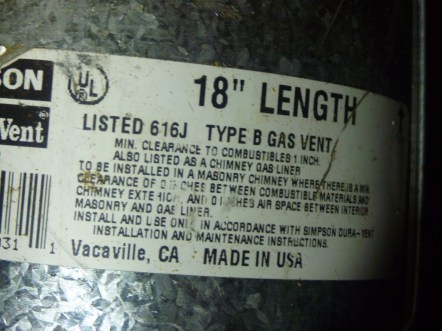
A few feet away I saw another label.  The manufactures for the gas flue for the water heater wanted to help the installers and make sure to remind them of proper installation:


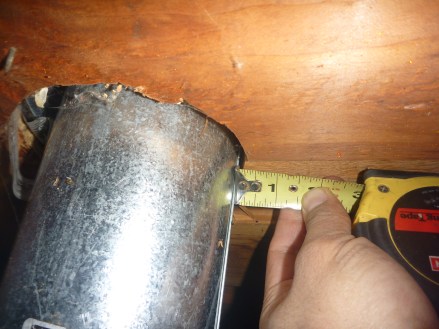
Looks like this was another instance of lack of proper literacy.   The purpose for the 1″ gap requirement is fire safety.  The type B vent is designed to stay cooler than a straight walled pipe however it does heat up.  Over the years the combustible materials that are too close to the pipe will heat up over and over again.  Each time this heating occurs there are slight changes in the molecular structure and the material’s flash point, temperature that it catches fire, drops.  Eventually this may become a fire hazard.

Labels are important.  Read, read, read and if you don’t know why you should do something, call someone, like a wonderful home inspector, who does!


Powered by ScribeFire.

Not everyone knows about the Old Cadet fire hazards that lurk in Salem Homes.

A few years ago a little company was producing a neat little electric wall heater that was easily installed, relatively inexpensive and allowed wonderful zonal heating (read-“energy efficient”)!

Things were wonderful for sometime but like most things there were a few issues with the first models. The little electric heaters were made by the Cadet corporation and after the release to the general public it was discovered that if housekeeping was not top notch these little heaters had the tendency to overheat (read-“catch on fire” and there could be “flames, sparks or molten particles spewing through the front grill cover of the heaters into the living areas”)!

The problem arose at the heat exchanging point. This is the point in every heating device where the heat that is produced in the heating device is transfered or “exchanged” to the medium that will carry heat to the home. The little wall heaters used fans to transfer heat directly to the home’s air through convection.Heat transfer of convection to describe problems with cadet heaters

The more surface area that the heating device can have exposed to the house air the better the transfer of heat. The more volume of air flows through the device the better transfer as well. There is a point between these two conditions where a balance between the two is chosen.

The little wall heaters that were brand new, met both of those expectations very well. Lots of heating elements (red hot wires) exposed to the air and the little fans did a very functional job of moving a large volume of air over the heated electric coils.

To prevent the red hot wires from getting dirty, which would insulate the heater elements from the air, hampering the exchange of heat, a small screen was placed in front of the fan. The little screen did a good job of keeping the elements clean, too good of a job.

The screens, especially in dusty areas or homes with pets became plugged very quickly. Even with the label on the side stating, “clean the heater fins every month,” these screens and heaters got neglected.Recalled cadet wall heater showing the vulnerability to over heating and fire in during a Salem Home Inspection

Although the heaters had wonderfully clean elements, the flow of air had been destroyed by the plugged screens. The thermostats didn’t know about the restriction of air and kept asking for heat. The elements got hotter and hotter as very little house air was able to flow over the elements to absorb the heat. This occurred over and over until the unit or the wall or both caught fire.


This is not new information as the CPSC noted the recall in Jan 1999. However, I still see the dangerous units in homes that I inspect around the Salem area.

The moral of this tale is; while we are in our friends, family and neighbor’s homes this holiday season we should keep our eyes open for these dangerous units. We should mention the recall to our hosts if we notice the electric wall heaters.

The way to determine if the units are dangerous is the model number.  You should look for: models FWFXLXTKZAZRARKRLXRXRW and ZC

The model number should be on the inside of the unit and behind the front panel.  At the risk of being like me, “that annoying home inspector guy,” you should try to locate the serial number without removing the panel.  I have learned that it is rude to take out a screw driver and start removing panels during a dinner party!  Also there is that little thing of high voltage live wires behind the panel…..

At the very least, you have a conversation starter for those awkward moments during the parties……..Where to find the cadet wall heater model number for the recall verification on a Salem Oregon home inspection

Time to winterize

Many posts have been written about how you should prepare your home for the winter months. Here in the willamette valley our

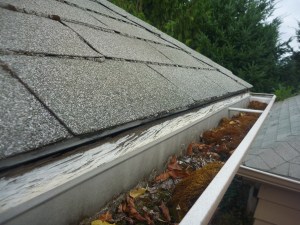
Plugged gutter on a home in Keizer, Oregon noted on a home inspection

winters are not all that extreme. It does stay wet, however we don’t get much snow on the valley floor and our temperatures very rarely dip much below freezing.  These moderate temperatures do have their own set of maintenance issues:

1. Gutters: Gutters, gutters, gutters. Did I mention gutters? Seriously, gutters. The manner in which we receive rain requires properly functioning gutters. For around 8 months we stay wet. Not huge downpours, just steady and wet. Every drop of rain that hits your roof is supposed to be concentrated and collected into a few spots around the home. If the collection system is plugged or allowing water to splash or dump around the home serious problems can develop. This is my number one thing to keep functional on my own home.

2. De-moss the roof. In general, every two years you will want to spread some moss killer. The shady slopes and roofs that are near large trees may need additional applications of the copper or zinc.

3. Remove the hoses from the outside water faucets.
I do not use the styrofoam cover thingys.  Again, it is all about our climate. If you remove your hoses it will not usually get cold enough to need those cover thingys.

Foundation vent plug in on a Salem Home Inspection

4. Crawlspace vents. There seems to be a viral belief in the necessity to plug the foundation vents. I do not think that this is a verygood thing to do. Most of our winter temperatures are going to be around 40 degrees. Pipes do not freeze at 40 degrees. More likely than frozen pipes is the possibility of moisture bubbling up from underneath the home. If the vents are all plugged, and water is present you have created a moist, stagnant area that is perfect for critters and fungus that eat the wood that is holding up your home. The moral of all of this is: Do not plug your vents unless it dips below 25 degrees, and as soon as it warms up again, take the plugs out.

Foundations; Which type of cracks are ok?

Foundation cracks are typically something that home inspectors look for around the perimeter inside and out. Foundations in Marion and Polk counties are usually a poured concrete or possibly concrete block type foundation.

Concrete does two things, it gets hard and it cracks. Small, less than an eighth inch, vertical cracks are typically indicators of shrinkage and are a normal part of the concrete curing process. The cracks that are potentially structural in nature falling in a few categories.
1. Diagonal cracks: these cracks typically occur near corners and indicate that the corner has settled. This happens either with moving down, or uplifting moving up. Diagonal cracks typically occur in pairs. One on either side of the corner.Cracks in a foundation in a old home in Salem Oregon.


2. Horizontal cracks: these cracks typically indicate pressures against the foundation wall from soils. Either in properly backfilled soils or soils that have unusual amounts of moisture creating excessive pressures.


3. Cracks with displacement: displacement indicates movement on either side of the crack. One side of the foundation has moved forward or back more than the other side. Displacement can occur with any of these types of cracks and is always an indicator of structural movement.


4. Cracks that are wider than one quarter inch: this indication can also occur with any of the previous mentioned cracks. Cracks that are larger than one quarter inch may indicate a significant amount of structural movement and repairs may be needed. When cracks of this size are noted standard operating procedure for most good home inspectors is to recommend a structural engineer further evaluate.Large foundation crack noted during a home inspection on a concrete foundation in a North East Salem, Oregon home.


Those are the styles of foundation cracks to look for. If any of the above four are noted it may be time for further evaluation. Home inspectors are always a good non biased source for structural evaluations.

This outlet was more than it appeared!

A large part of my job is learning. Learning about materials, techniques and styles allows me to be a resource when questions arise. it is important for home inspectors to be “know it alls” about most things relating to homes. Just as important as knowing about stuff is realizing that there is always new stuff to learn about. I am never surprised when I discover something completely new and that is one of the best parts of my job.
The video below was taken on a re-inspection. I had griped about the lack of power to the second outlet in the bathroom on the initial inspection. The sellers enlightened me on the more secretive purpose for this particular outlet!

Don’t make Griping about Gutters so easy on this Marion County Home Inspector

Debris Noted on a Roof Inspection on this North East Salem Oregon GutterYour gutters need attention.  The shorter days have told the trees to drop their leaves.  Not only that, the rains are about to begin again. Your gutters will be working overtime for the next few months in this area.  It is important to keep your gutters clean.  This will require cleaning your gutters out several times over the next few months as the different trees around your home drop their leaves at different times.

We all know that the parts that are exposed to the elements (and leaves) are important to keep clean but lets not forget about the underground pipes as well. These pipes are low and out of sight and are easy to forget about. Those underground pipes are probably the most important part of the system as they will collect, concentrate, and (hopefully) remove the concentrated storm water from around your house.a home inspection of a downspout revealed leakage on this Illahe home inspection

In Marion and the surrounding counties, the underground pipes are usually where things are going wrong and unless inspections or unusually close attention is paid, things can go wrong for months or even years.   It really is all about the way we receive rain.

The rains in the Willamette valley, in Salem and surrounding parts of Oregon show up in mid October and things stay moist until the middle of May.  We don’t necessarily receive a lot of rain, it is just steady and the clouds do not usually part long enough to dry anything out.

The gutters, downspouts and underground pipes are the wettest points around our home.  If there is water in your crawl space or basement the gutter and downspout system is usually the main culprit.  Standing water in the crawlspace of this South Salem Home

A great test for the underground system is to shove a garden hose in it and see where the water comes out.  If water bubbles to the surface in the area you are testing…….you have some work to do.

Universal Symbols of Destruction noted by this Marion and Polk County Home Inspector

Universal symbols are everywhere these days. Traffic signs especially have pictures and symbols instead of words so that any person, know matter what language they speak, can understand what is expected of them.  There are universal symbols that all good home inspectors should recognize as well.  Mushrooms growing out of your siding, large cracks in foundations and carpenter ants streaming out of a sill-plate are all things that any home inspector should recognize as a universal symbol of problems.


Another important universal symbol for home inspectors recognize in this area are two small copper lines, going into the ground in garages or crawl spaces.  These copper lines, can be indicative of underground oil tanks. These tanks, if not remediated properly can be a significant cost and an environmental hazard to a home-owner/home-buyer.


The Department of Environmental Quality in Oregon does maintain a database of remediated oil tanks.  As I wrote previously, the database is relatively new and unless the tank has been remediating recently, there would not be record of the tank.  This means that it is still important for home inspectors to keep their eyes out for the universal symbols and to let the buyers, agents and sellers that are involved in the transaction know about this potential environmental issue.

That is not garbage!

The cabinet under the kitchen sink is a highly neglected area.

This is the area where we shove highly noxious cleaners and surfactants. Many people even have garbage cans under their sinks. For me, the soap and cleaners are no exception however I do not keep any garbage under my sink. In fact, I keep a tub to collect some of the best stuff that my household produces.

The tub holds all kinds of material that is just full of macro and micronutrients. It is organic, all-natural and when I take it to its place of magic, outside, it is just teeming with molds, fungus, and all sorts of wiggling organisms doing their part to better my life.

The tub is a significant part of the process however the real magic does not happen till it goes outside.  Once the tub’s payload is delivered the previously mentioned critters go to work.  Through (hopefully) aerobic bacterial action the complex materials are consumed, and wastes are excreted.  Sounds gross but it is actually exactly what I want!

Once most of the available complex materials are consumed most of the microorganisms die.  Sad, but it is an integral part of the process, and their death releases tons of Nitrogen, Phosphorus, and Potassium as well as all sorts of other trace elements that are ready and waiting for the lucky plants that get to grow their roots into the piles of decomposed microorganisms.

If you haven’t figured it out yet, I am talking about the lowly compost pile.  It begins as a pile of food debris under my kitchen sink but ends up feeding my plants what they need to grow strong and healthy.

How old is your roof? This Salem Oregon Inspection has a trick!

My favorite part of being a home inspector here in Salem, Oregon is learning CONSTANTLY! For an attentive observer, there are always things to learn about.

A few years ago, I was on a roof and the agent asked me how old the roof was. I told her that I couldn’t really tell, but that I guessed that it was maybe 1 or 2 years old. She asked me why didn’t I look at the date stamp on the flashing boot?

(•blank-home-inspector-look•) The wha…!?

Yup, every so often even the know-it-all home inspector has something to learn. Right there, stamped for all who know where to look, is the date that the flashing was made. Of course, this is not an exact date of roof installation, but it is usually within 6 months.

A pretty neat little trick.