Home Maintenance
That’s what that thingy is for??
Jim Allhiser
President/Inspector
http://SalemOregonHomeInspections.com
503.508.4321 jallhiser@perfectioninspectioninc.com
Helpful presentation to keep you from getting Burned!
Unfortunately WordPress doesn’t seem to want to allow me to embed my presentation this morning so you all will have to bear with me and click on the link below:
Water heater temperature adjustment presentation
Jim Allhiser President/Inspector
http://SalemOregonHomeInspections.com
503.508.4321 jallhiser@perfectioninspectioninc.com
Wood Chip siding/OSB Problems and Maintenance Ideas Noted on Salem Oregon Home Inspections
As wood products have become more and more expensive the search for a viable inexpensive alternative has intensified. In the world of siding real wood is still hard to beat. Real wood sheds liquid water and allows water vapor to effectively come and go. Solid wood is really a fantastic siding material but it is expensive so creative companies have been trying to develop a product that could be made from wood by-product (wood chips and fiber).
Wood chip siding has been around for many years but in the late 80’s and early 90’s a certain type of OSB (Oriented Strand Board) siding really became popular around Salem, Oregon and the Pacific Northwest. The type that really had issues was the lap type made by Louisiana Pacific (LP). This product had an adhesive that did not resist moisture effectively, and because proper sealing with primer and paint and continued home owner maintenance cannot be counted upon, the siding began to absorb moisture very quickly and began to deteriorate (grow mushrooms/fall apart).
LP went back to the drawing board, made some adjustments and continued to produce a very similar “wood chip” lap siding. The adjustments were made to the sealing process. They primed the entire board at the factory not just the front face, and they put a bevel on the drip edge of the siding that would help water drip off instead of being absorbed.
Wood chip siding also comes in panel form and although it is a similar product to the lap siding it doesn’t have as high of a percentage of vulnerable areas. With the lap siding the bottom drip edge and all the other edges (only the front face is really the only durable side) are vulnerable and should be actively sealed/maintained with primer
and paint. The panel boards come in 4’x8′ sheets and again only the edges are vulnerable but the damage resistant surfaces (again the front face) are much larger per piece. The panels edges still need to be sealed actively.
One of the most common mistakes I see on home inspections around Salem, Oregon is the very bottom edge of the siding not getting painted. Of course I carry a mirror that makes it easier for me to see that bottom edge that is only 8″ off the ground, but even with out fancy home inspector g ear you can get down on your knees and make sure this most vulnerable of areas gets sealed. Both panel and lap siding have this issue and usually from waste down is where the lap goes bad and the very botto m is where the panel siding doesn’t get painted and begins to fail.
Now what is “failure/deterioration/dry rot?” In one of my earlier posts I wrote about “dry rot,” and why I do not use that term. I prefer to use the term deterioration and basically that refers to a level of hardness or lack-of-hardness. A good rule of thumb is: “If you poke it with your finger does it flex easily?” or (and if you are looking to buy a home that is not yours yet please leave this method to the professional home inspector) “Will a screwdriver/awl/knife point penetrate easily?” If the answer is “yes” to either of those questions then the siding will not be able to sufficiently hold on to primer/paint and therefore it will not be able to shed water effectively and will continue to deteriorate and possibly begin to allow deterioration of related areas of the home (wall structure).
Some of the composite (wood chip/particle) sidings begin to swell when the paint is failing and allowing water to be absorbed. Sometimes this swelling can be stifled with prudent and active painting. But again the siding has got to be “hard” still. If it flexes it will not be able to hold on to the paint that will prevent further moisture absorption and will need to be replaced.
As the siding products have evolved, there have been good and not so good products. The siding’s job is to shed water while allowing water vapor to come and go. This job must be achieved while striving for low cost, durability, and ease of installation. The “wood chip,” siding met a few of those needs, low cost and ease of installation, while suffering in the durability aspect. However with knowledge of this type of siding’s vulnerabilities and active/aggressive maintenance it can be a lasting and effective siding system.
Jim Allhiser President/Inspector
http://SalemOregonHomeInspections.com
503.508.4321 jallhiser@perfectioninspectioninc.com
The Door between the Garage and the Home: Your first line of Defense
If a fire does start in the garage a proper fire rated door and properly constructed fire wall are the best lines of defense to allow you to make your escape before the fire comes into the home.
There are a few ways to tell if your door has been updated. Most solid-core and metal doors are fire rated. There can also be a little metal tag on the hinge side of the door that will give some more information.
The pictures show what a hollow-core door looks like with thermal imaging/Infrared. The strips you can see are actually sections of cardboard.
Jim Allhiser President/Inspector
http://SalemOregonHomeInspections.com
503.508.4321 jallhiser@perfectioninspectioninc.com
Your Cat is Killing this Salem, Oregon Home Inspector and Your Home’s Crawlspace
Part of my job is crawling around under
people’s homes. This is by far the
nastiest part of being a home inspector here in Salem, Oregon.
Most of the time crawl spaces are really not all that bad. Spiders, yes but in the Salem, Oregon area we
have very few seriously poisonous ones.
Spiders don’t chew on your home and I am quite a bit bigger than most of
them so, they don’t bother me that much.
When
cats can get access, things get really nasty.
Your fluffy-wuffy
uses crawlspaces for a litter box, urinal, and
graveyard. Yep, it can get nasty when
old Garfield can get under your home.
Not
only does Mr Snookums defecate in the areas I need to crawl, he also shreds and
disconnects ducts, and crawls between the heated floor and the insulation and
ruins the fiberglass insulation.
Sometimes
there are signs or other critters: rats, mice, raccoons, opossums. They all like crawlspaces but it seems that,
per capita, the cats have market share on shear crawlspace destruct
ion.
Jim Allhiser President/Inspector
http://SalemOregonHomeInspections.com
503.508.4321 jallhiser@perfectioninspectioninc.com
Kill your heating system one month at a time
How great it feels to take a deep breath. To feel the stretch of the lungs as they fill with air. It is refreshing and satisfying.

Grosssss!
A little dramatic, I admit but it is very similar to how your furnace feels. Most forced air systems use a big fan to suck air in and push that air over a heat exchanging device and then blow that newly conditioned air throughout the home. The thermostat, usually located centrally in the home, calls for heat the furnace starts heating up. When the brains of the furnace decide the heat exchanging area has heated up enough the fan turns on. It is now the fan’s job to pass air over the heated area and blow that heated air throughout the home.
It is my job to look at furnaces and filters every day and as a general rule: people change their furnace filter when they move in and when they move out. When the filter is dirty the fan is forced to work much harder. Less air is moving over the heat exchanger so more energy is used. This also shortens the life of the entire unit.
Change your filters at least every 30 days in the cooling cycle and 60 days in the heating cycle at least. It will save you money on energy, extend the life of your system and give your poor furnace a welcome breath of fresh air.
If you want to Replace your Flooring in the Bathroom DON’T do anythnig.
The science of building has created systems to prevent water infiltration and damage. Most of the systems that are exposed to water have layers of protection. If the top layer fails there will be a second or even third layer to catch the water and kick it out before it is able to damage teh home’s components. This is true of properly constructed roofing and exterior components but not the other area in the home that sees a lot of water: the bathroom.
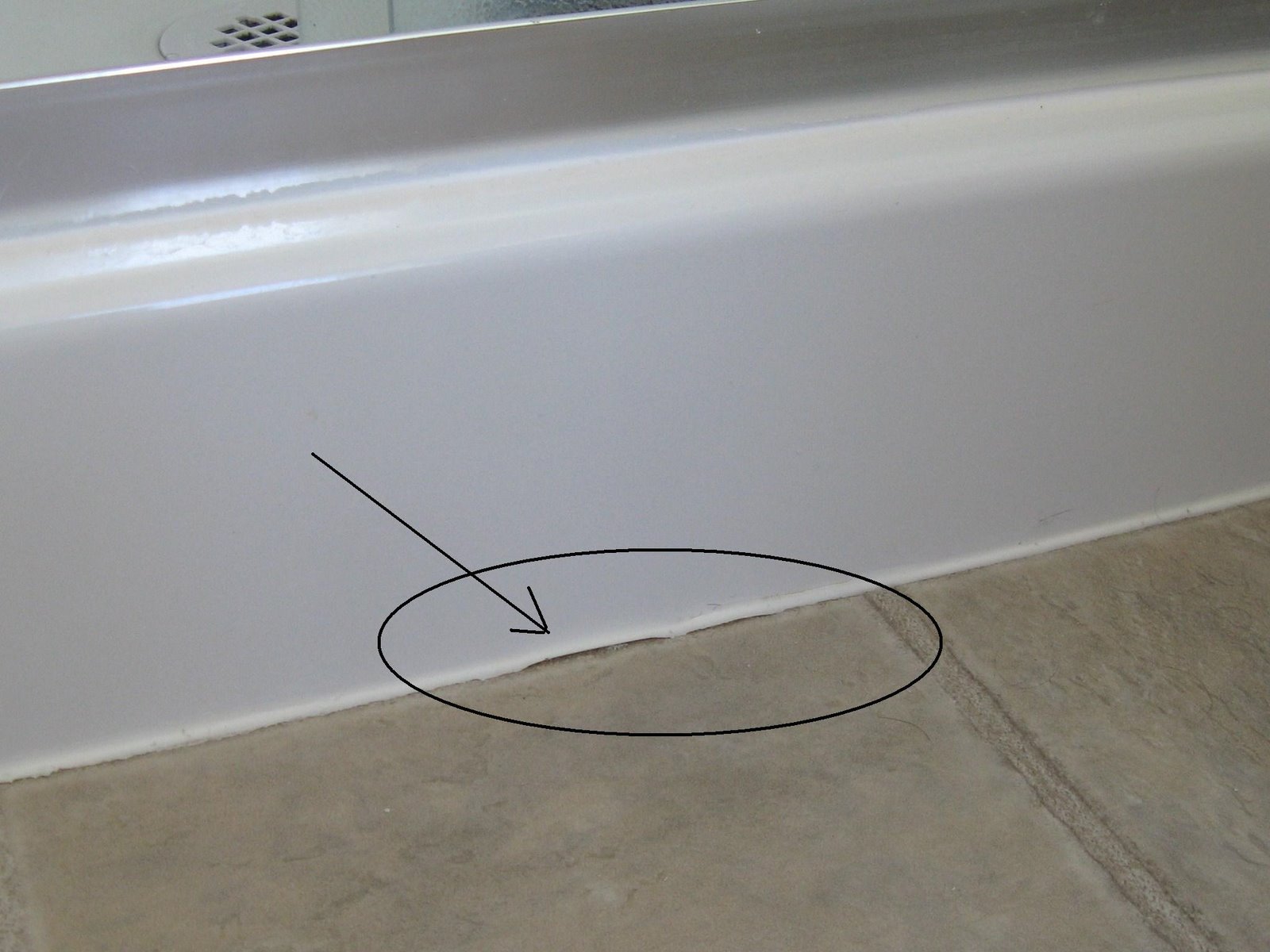
The seam between the bathtub and the flooring is especially vulnerable and is sealed with a flexible caulk. The subfloor is usually an engineered particle board and can be very sensitive to water exposure. The purpose of the caulk seam is to try to seal t
his joint as the two different materials move independently. The more water the seam sees the more likely it will open up, and particle board acts like a sponge that expands as soon as it is exposed to moisture.
I see grout used between the tub and the floor often, on home inspections, but it is not a very good solution. The tub is made of a different material and the grout will fracture and break.
Caulking is the best but it will need to be maintained. That means when it fails the caulk should be removed and a new, fresh seal should be applied. Seriously, when the caulking joint opens up, it is time to get in there with the razor blade and remove the old caulk. This should be done before damage to the flooring occurs.
Do not put this little maintenance item off unless you want some major changes to the flooring. If you want a comprehensive list of things in your home that you “ought to get around to,” in the Salem, Oregon area, call me.
Smoke Detectors detect more than smoke
Smoke detectors should be our silent watchmen. They should patiently wait, ready to alert us of the possibility of fire. Unfortunately sometimes they go off for reasons other than fire:
2:30am Instantly awake! All of the smoke detectors in our home are going off. BEEP, BEEP, BEEP!!! For close to 30 seconds then they turn off. I jump out of bed and run into the hall between the kid’s and our room ready to assess the situation and get the kids out of the house……Nothing, no smell of smoke, no crackling fire. No indication of fire at all! At this point, the sudden rush from being totally asleep to totally awake and high on adrenaline for no apparent reason has me more than a little irritated.
Our home was less than a year old so the next morning I called our builder. He said he had never heard of that and didn’t know what to tell me. I let it go. The silly detectors performed properly for another 6 months and the same thing happened! Middle of the night, sound asleep, BEEP, BEEP, BEEP!! for about 30 seconds.
A few months later I got a call from a client describing a similar situation. I called the detector company.
Within a few minutes I was describing the phantom alarms to a real person at customer service. He guessed that a spider was causing these false alarms! Our wired-in alarms has a little green light that attracts the spiders. When the spider gets to crawling around and exploring the crevices it steps into the ionization sensor. The s
ensor ‘sees’ the spider as smoke and sounds the alarm. All of this sudden vibration alarms the spider who promptly finds a new place to explore.
The best thing to do to (hopefully) prevent this arachnid exploration is to blow out the detector and sensor with ‘canned air’ every so often. Spiders are territorial and if they are disturbed repeatedly they will find new areas to hang-out.
It has been about a year and a half since the last false alarm. I hope this insight answers some questions for those of you who have had similar experiences.
Have you Inspected your Salem, Oregon home’s GFCI’s lately?
Ground Fault Circuit Interrupters: They are a wonderful safety item that has been required around water since the ’70s and according to the CPSC could prevent o
ver two-thirds of the approximately 300 electrocutions still occurring each year in and around the home. Installation of the device could also prevent thousands of burn and electric shock injuries each year.
GFCI’s continually monitor what goes out, through the hot side and what comes back through the neutral side. Power always flows in a loop so these devices can tell when there is leakage, ie. ground fault.
Ground Fault: Is where the loop of electricity, instead of properly running out the hot side (into the thing that’s plugged in) and back in to the wall on the neutral side, gets shorted. In other words the power jumps out of the loop / you might get shocked.
That jump/shock is very likely to happen when you are handling your mixer, weed trimmer, curling iron, etc…. that has an electrical problem (internal loose wire maybe) and you reach for something that can allow a direct flow of electrons to go right in to the ground (faucet, water pipe).
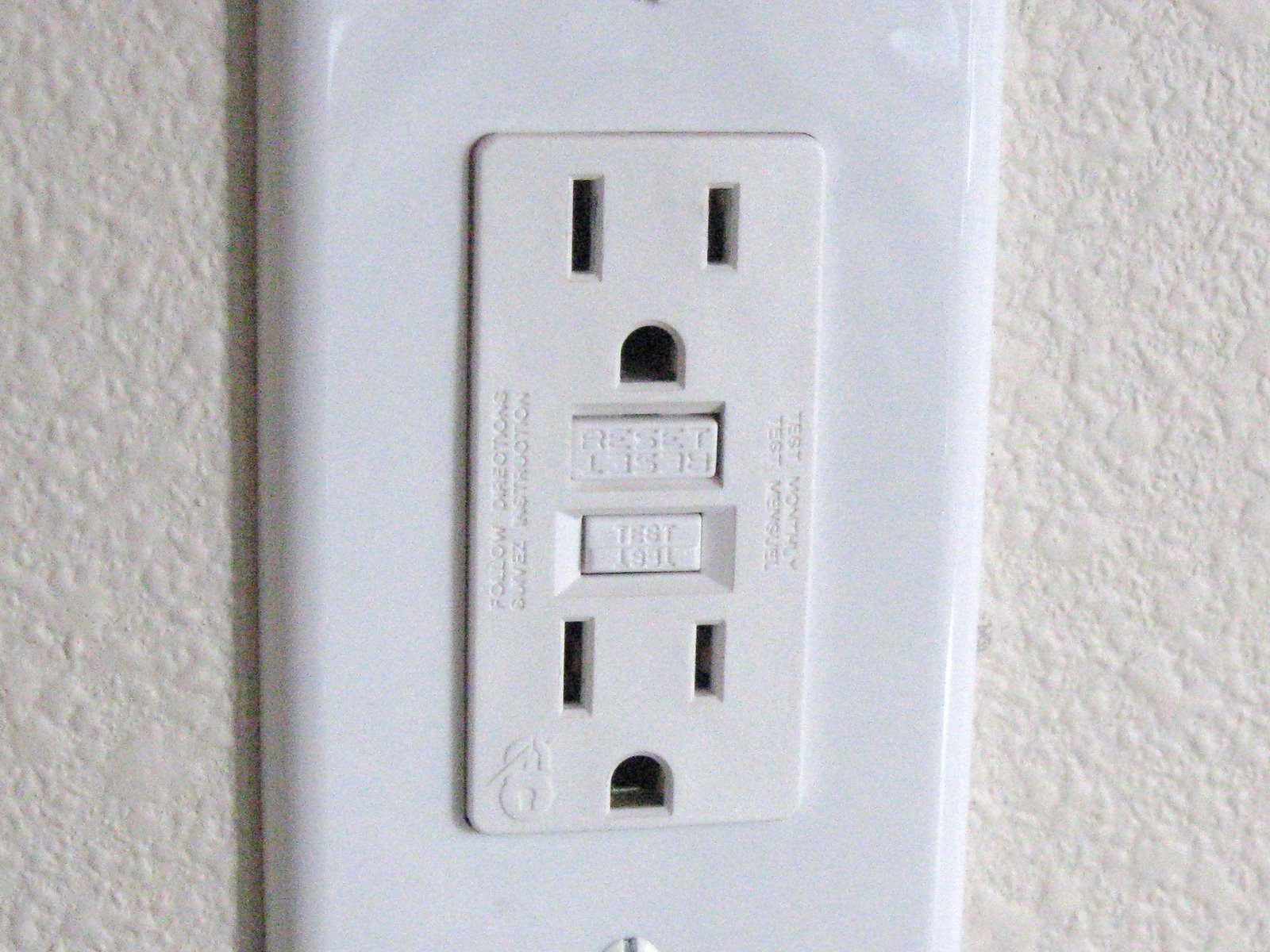
So how and how often should you test my GFCI’s? If you look closely on the GFCI it will say, “Test Monthly.” To properly test you should plug something in that you can see is on, like a lamp. Then press the test button. The buttons should ‘pop’ and the lamp should go off. Then reset the button and the lamp should come back on.
If the test doesn’t happen like that, it may be time to replace your hard working GFCIs.
If that is still to much work I would be happy to come and inspect the function of the GFCI’s in your home.